Gochujang, the Red Heart of Korean Cuisine
EAT
Korean cooking begins with its sauces. At the centre lies gochujang – a deep red paste that combines heat, sweetness, saltiness, and umami. In Korean kitchens, gochujang is an everyday essential. For K‑food fans across London and Europe, it has become the iconic red symbol of “Korean flavour”.
The Birth of Gochujang: Fermentation Science

Gochujang’s story traces back to the late 16th century, when chillies arrived on the Korean Peninsula around the time of the Imjin War. This new spice met Korea’s existing culture of doenjang and ganjang, creating an entirely different red fermented paste. Historical accounts suggest that cooks began mixing chilli powder into aged doenjang, gradually perfecting today’s gochujang.
Gochujang is not simply a “spicy sauce” but a complex fermented food created by grain, soy, and microorganisms working together. Chilli powder, made from Korean chillies, is used as the primary ingredient to capture their characteristic aroma, colour, and heat. To this, glutinous or regular rice and sometimes wheat flour are added; as their starches break down into sugars, they lend a gentle sweetness and a pleasantly sticky texture. Meju powder, the core of the fermentation, helps proteins break down into amino acids, building a deep umami flavour. Salt suppresses unwanted microbes and stabilises salinity, making long‑term fermentation possible.
Once these four elements are combined, the paste is traditionally transferred to porous earthenware jars and left to mature outdoors for at least three to six months. Sunlight during the day and cooler temperatures at night create a natural rhythm for microbial activity, and through this slow breathing of the seasons, gochujang gradually develops its distinctive depth and complexity.
Regional Differences in One Spoonful

Each region shapes gochujang according to its climate, grains, and preferred level of heat. A single spoonful reveals these subtle differences.
Sunchang, Jeolla Province: Higher glutinous rice content emphasises rounded sweetness and a creamy texture. Known as the “sauce village”, Sunchang gochujang has depth with a gentle, balanced finish.
Gyeongsang Region: More chilli powder creates brighter, more intense heat. The clear salt–spice contrast pairs particularly well with grilled meats.
Five Iconic Korean Dishes Featuring Gochujang
London’s Korean restaurants now make gochujang easy to encounter. These five dishes show how it defines the character of Korean cuisine.

1. Bibimbap
Five to six kinds of seasoned vegetables, beef, and a fried egg, topped with one spoonful of gochujang. That single spoonful coats every grain of rice and helps to balance the flavour of the entire bowl.

2. Tteokbokki
A classic Korean street‑food dish of chewy rice cakes simmered for about 20 minutes in a gochujang‑based sauce. Its addictive character comes from the way sweetness and heat coexist in each bite.
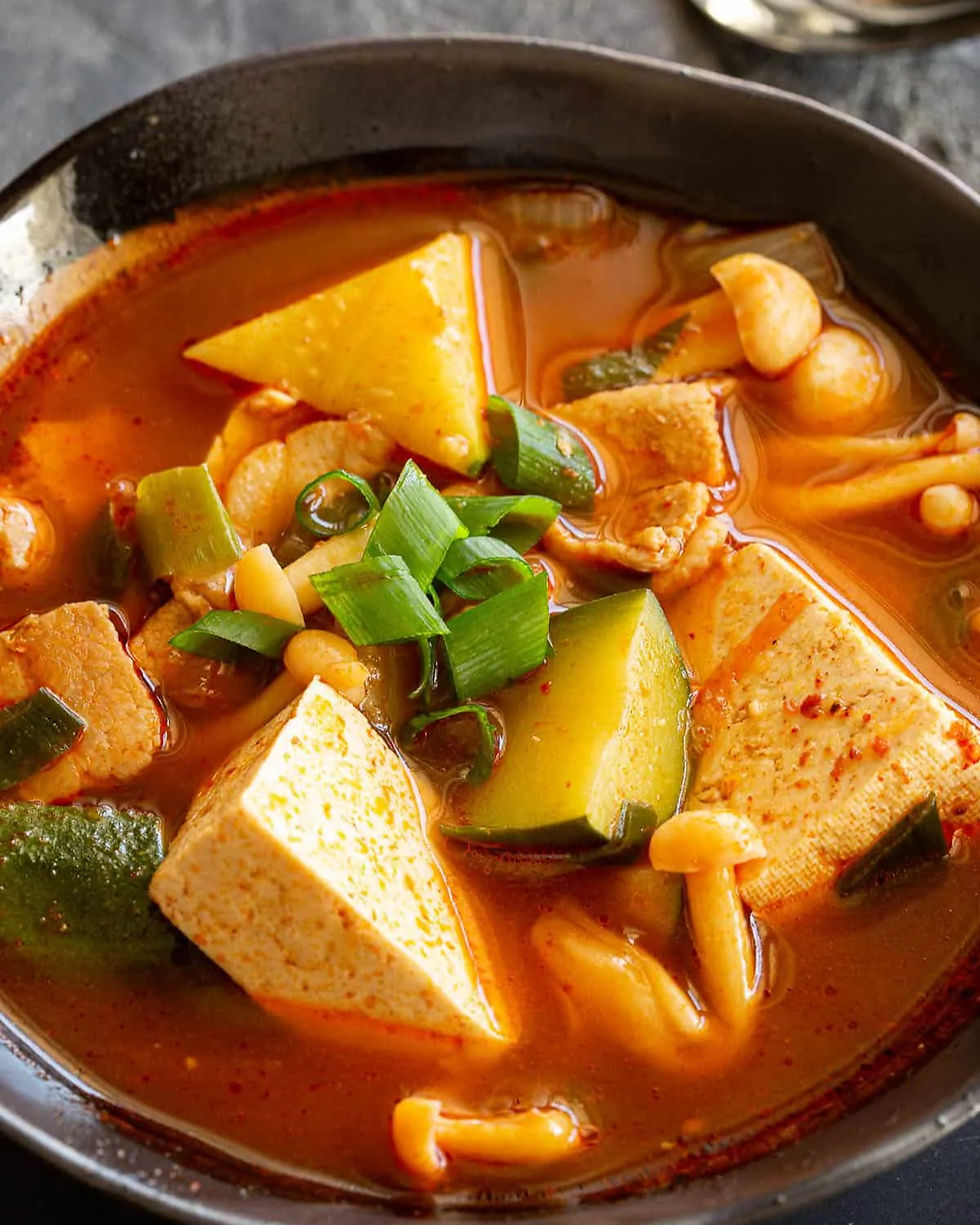
3. Gochujang Stew
A home‑style stew made with pork, kimchi and potatoes, enriched with gochujang to create a deep, robust broth that showcases the paste’s inherent umami.

4. Yangnyeom Chicken
Crispy fried chicken pieces tossed in a gochujang glaze. The contrast between the crunch and the sweet‑and‑spicy coating captures the essence of Korean fried chicken.

5. Bibim Naengmyeon (Spicy Cold Noodles)
A summer favourite of cold buckwheat noodles mixed with a tangy, slightly sweet gochujang‑based sauce. The chill and acidity lift the heat, making it refreshing rather than heavy.
Finding Gochujang in the UK

Recommended Brands to Try
Haechandle Taeyangcho: One of the best‑selling Korean brands, made with sun‑dried chilli peppers and known for its clean, refreshing heat.
Chung Jung One Sunchang: A premium line named after the traditional sauce‑producing town of Sunchang, with toasty sweetness and a smooth texture.
Sempio Gluten‑Free: Produced to meet European gluten‑free standards, suitable for people with allergies or specific dietary needs.
Shopping Tips
New Malden: Often called London’s Koreatown, with large Korean supermarkets where you can compare multiple brands side by side.
Ocado & supermarket chains: Ocado, Sainsbury’s, and some M&S branches stock mainstream brands such as Haechandle and Chung Jung One.
Amazon & online: Useful when you are looking for specific types, such as gluten‑free gochujang.
Editor H.
KOREAN
고추장, 한국 음식의 붉은 심장
한국 음식은 양념장에서 시작된다고 해도 과언이 아니다.
그 양념장의 중심에는 매운맛, 단맛, 짠맛, 감칠맛을 한데 품은 붉은 장, 고추장이 있다.
한국인에게 고추장은 식탁에서 빠지지 않는 일상의 소스이고, 런던을 비롯한 유럽의 K-푸드 팬들에게는 ‘한국의 맛’을 상징하는 붉은 색의 아이콘이 되었다.
고추장의 탄생: 기다림으로 빚은 발효 과학
고추장의 역사는 고추가 한반도에 들어온 16세기 후반 이후로 거슬러 올라간다. 임진왜란 전후에 도입된 새로운 향신료, 고추는 기존의 된장·간장 문화와 만나 전혀 다른 붉은 발효 양념을 탄생시켰다. 한국의 된장에 고춧가루를 섞어 숙성시키면서 지금의 고추장 형태가 정착된 것으로 알려져 있다.
고추장은 단순히 ‘매운 소스’가 아니라, 곡물과 콩, 미생물이 함께 만든 복합 발효 식품이다. 한국 고추 특유의 향과 색, 매운맛을 위해 고춧가루가 주 재료로 쓰인다. 여기에 전분이 당으로 분해되면서 은은한 단맛과 찐득한 질감을 만들어주는 찹쌀이나 멥쌀, 밀가루가 더해진다. 발효의 핵심인 메줏가루는 단백질이 아미노산으로 분해되며 깊은 감칠맛이 날 수 있도록 돕는다. 소금은 잡균을 억제하고 염도를 잡아 장기간 발효가 가능하도록 한다. 이 네 가지 재료를 섞은 뒤, 전통 방식에서는 옹기 항아리에 담아 최소 3개월에서 6개월 이상 숙성한다. 낮에는 햇볕을 충분히 받고 밤에는 온도가 떨어지는 야외 환경이 미생물 활동에 리듬을 부여하고, 이 느린 호흡 속에서 고추장은 점점 더 깊고 복합적인 맛을 갖게 된다.
지역에 따라 달라지는 한 숟가락
각 지역은 기후, 사용되는 곡물, 선호하는 매운맛의 강도에 따라 고추장을 조금씩 다르게 빚어 왔다. 한 숟가락의 고추장 안에도 그 지역의 기후와 식문화, 입맛의 차이가 섬세하게 스며 있다. ‘장 마을’로 알려진 전라도 순창의 고추장은 깊이 있으면서도 둥근 맛이 특징이다. 찹쌀 비율을 높여 구수한 단맛과 부드러운 질감을 강조한다. 경상도 지역은 고춧가루를 듬뿍 넣어 보다 선명하고 강렬한 매운맛을 선호한다. 짠맛과 매운맛의 대비가 분명해 고기 요리에 특히 잘 어울린다.
고추장이 빛나는 한국 음식 다섯 가지
이제 런던 곳곳의 한국 레스토랑에서도 이 고추장을 쉽게 만날 수 있다. 아래의 다섯 가지 음식은 고추장이 어떤 식으로 한국 음식의 캐릭터를 만들어내는지 보여준다.
비빔밥 나물 5~6가지, 고기, 계란프라이 위에 고추장 1스푼을 더한다. 고추장이 밥알 하나까지 코팅하며 그릇 전체의 맛과 균형을 잡는 역할을 한다.
떡볶이 쫄깃한 떡을 고추장 양념에 약 20분간 졸여낸 대표 분식 메뉴로, 단맛과 매운맛이 함께 공존하는 중독적인 맛이 특징이다.
고추장찌개 돼지고기, 김치, 감자에 고추장을 더해 깊은 국물 맛을 내는 가정식 찌개로, 고추장 고유의 깊은 감칠맛을 느낄 수 있다.
양념치킨 바삭하게 튀긴 닭에 고추장 글레이즈를 버무려 완성한다. 바삭한 식감과 매콤달콤한 양념 맛은 K-프라이드 치킨의 정수를 보여준다.
비빔냉면 고추장을 기본으로 한 새콤달콤한 소스를 차갑게 식힌 메밀 면발과 함께 비벼 먹는 여름철 별미이다.
영국에서 고추장 고르기
시도해볼 만한 고추장 브랜드
해찬들 태양초: 한국 판매 1위 브랜드. 태양에 잘 말린 고춧가루를 사용해 청량한 매운맛이 특징이다.
청정원 순창: 전통 생산지인 순창의 이름을 내세운 프리미엄 이미지. 구수한 단맛과 부드러운 질감이 돋보인다.
샘표 글루텐 프리: 유럽 식품 규정을 고려해 글루텐 프리로 제조된 제품으로, 알레르기나 식단 제한이 있는 소비자에게 적합하다.
구매처와 구매 팁
New Malden: 런던의 한인타운으로 불리는 뉴몰든에는 큰 규모의 한국 마트가 있어, 여러 브랜드 제품 비교가 가능하다.
Ocado·대형 마트 체인: Ocado, Sainsbury’s, 일부 M&S 등에서 청정원·해찬들 등 주요 브랜드 제품들 구매가 가능하다.
Amazon 등 온라인 마켓: 샘표 글루텐 프리처럼 특정 타입을 찾을 때 유용하다.


