Naengmyeon: A Korean Bowl for Summer Heat
Updated: Aug 18
EAT
Korean summers are hot and humid. Monsoon rains and heat waves often overlap, pushing temperatures higher and making the air feel even heavier. This year, Europe and the UK have also been dealing with record-breaking heat. The UK reached 37.7°C in late June, setting a new June record, while several parts of Europe endured temperatures of around 45°C.
In weather like this, people naturally reach for cold drinks or ice cream. In Korea, many people also instinctively think of naengmyeon, or cold noodles, as the perfect meal for days like these.

A Country That Eats Cold Noodles
Naengmyeon is more than just a bowl of chilled noodles. It brings together icy broth, the earthy aroma of buckwheat, a clean and refreshing taste, and a very Korean way of turning summer heat into something edible. Many countries have their own cold noodle dishes, but it is rare to find one served cold enough for ice to float in the broth and enjoyed as an everyday meal. For first-time diners, that can feel a little unexpected, and many visitors wonder why the noodles are served cold at all. In Korea, though, that chill is exactly what makes the dish so satisfying on a sweltering day. A spoonful of icy broth followed by a bite of chilled noodles can feel like the answer your body has been waiting for.
A Dish That Keeps Changing
Naengmyeon has a long history. According to the Encyclopedia of Korean Culture, it developed in the northern part of the Korean Peninsula and appears in records from the Joseon period. It was originally made with buckwheat noodles combined with starch, but the naengmyeon people eat today has evolved considerably over time.
After the Korean War, migration from the North helped spread naengmyeon across the country. Pyongyang-style naengmyeon preserved memories of the North, while Hamheung-style naengmyeon became known for its chewier noodles and spicier dressing. Over time, naengmyeon shifted from being primarily a winter food to becoming one of Korea’s best-loved summer meals, with broth styles and toppings evolving across regions and generations.
In Seoul, long-standing restaurants such as Woo Lae Oak, Pyeongyang Myeonok, Pildong Myeonok, Eulmildae, and Nampo Myeonok have each preserved their own versions of the dish. Together, they show that naengmyeon is not a fixed recipe but a living tradition passed down from one generation to the next.


A Meal That Feels Considered
Korean food culture has long regarded food and well-being as closely connected. Seasonal ingredients, balanced flavours, and the idea of eating in harmony with the body remain very much a part of everyday life. Seen in that light, naengmyeon is not just a cold dish but a summer meal that feels quietly thoughtful. Buckwheat noodles, a clear broth made with dongchimi or meat stock, and toppings such as cucumber, pear, and egg come together in a bowl that is cooling without feeling heavy.
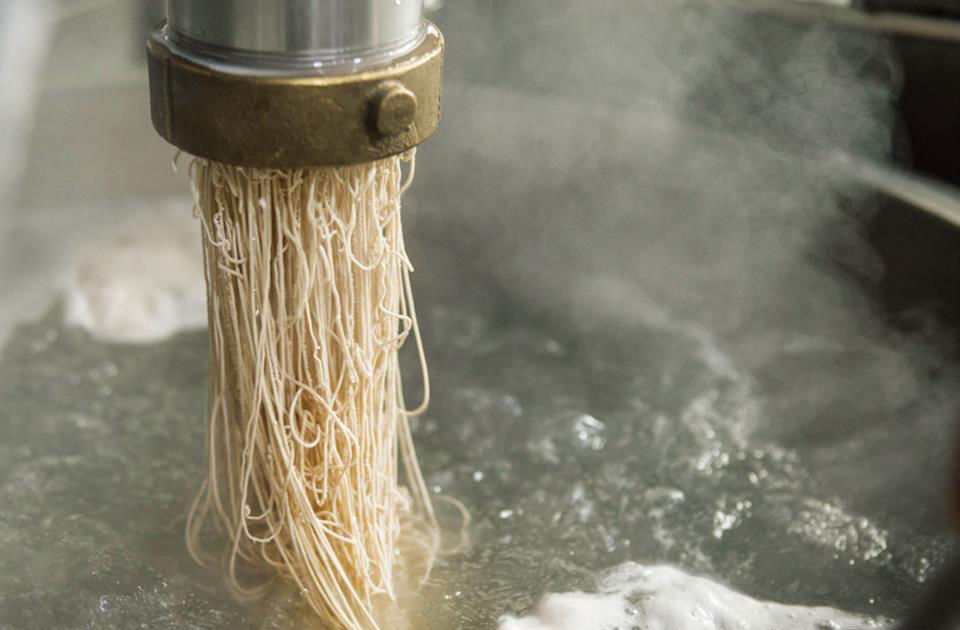
How Koreans Eat Naengmyeon
Naengmyeon is often enjoyed as part of a larger meal. After grilled meat, it is a classic finishing dish that cleanses the palate, and Pyongyang-style naengmyeon is especially loved for its clean, understated finish. Some people also turn to it as a hangover meal because the cold, clear broth feels soothing the next day. It also pairs well with dumplings and other meat-filled side dishes, creating a more balanced and satisfying meal.
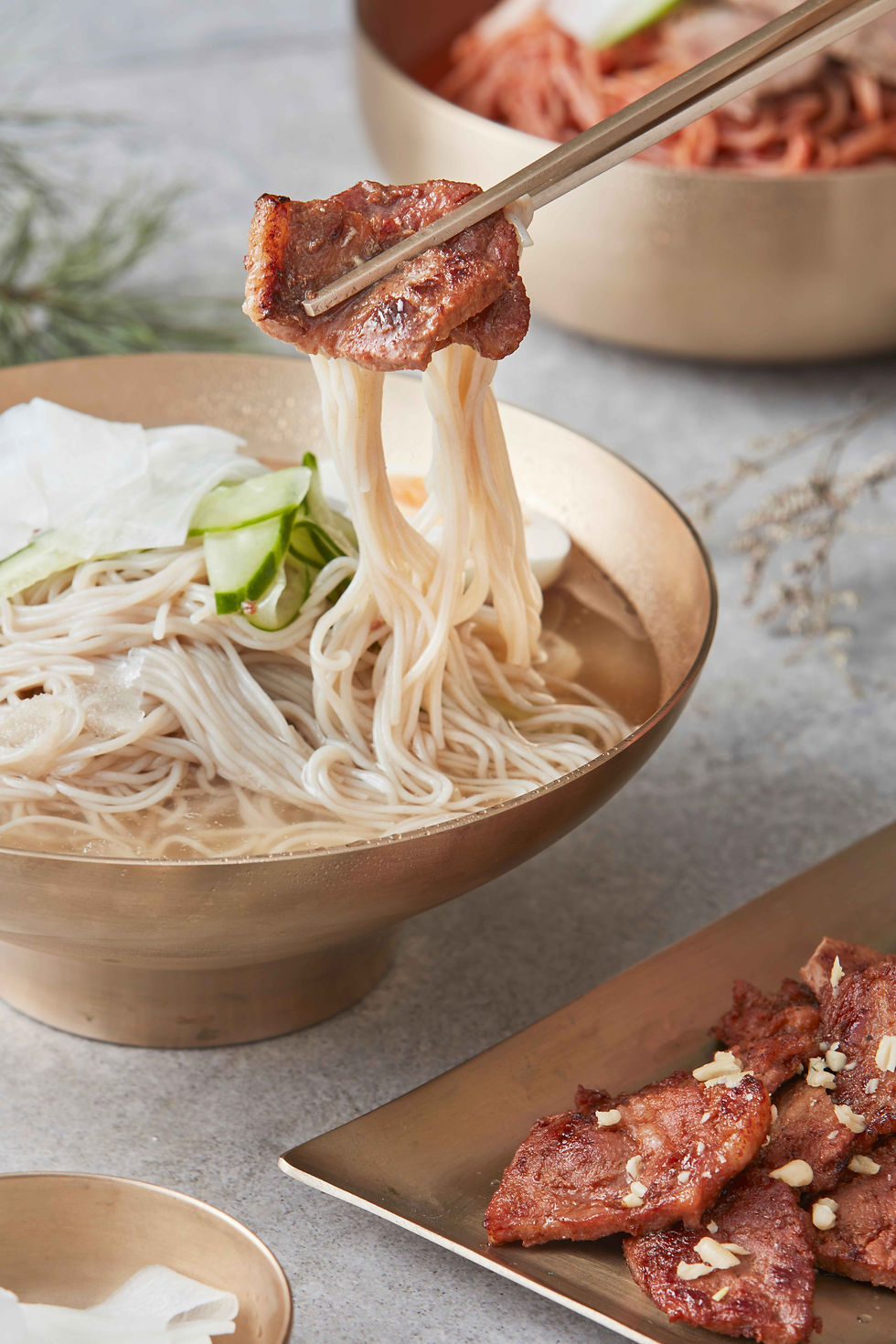
Where to Find It in the UK
Naengmyeon comes in several forms, from Pyongyang-style noodles in broth to Hamheung-style spicy mixed noodles, as well as convenient versions that can be prepared at home. In London, many Korean restaurants serve both mul-naengmyeon and bibim-naengmyeon. Korean supermarkets such as Korea Foods, H Mart, and WASO London also stock naengmyeon noodles, broth, and other ingredients, making it easy to prepare the dish at home.


A Bowl That Holds a Season
In the end, naengmyeon raises a simple question: why can one cold bowl hold so many stories? Perhaps because it is not only a way to cool down but also a distinctly Korean way of making it through the summer. A little ice in the broth, the quiet strength of buckwheat noodles, and memories of the season all come together in a single bowl.
If you want to follow those stories beyond the bowl, Netflix’s Korean Cold Noodle Rhapsody is a good place to start.

Editor H.
KOREAN
여름을 견디는 한국식 한 그릇, 냉면
한국의 여름은 덥고 습하다. 장마와 폭염이 겹치면서 낮에는 체감온도가 크게 오르고, 비가 오더라도 공기는 쉽게 식지 않는다. 올해는 유럽과 영국 역시 기록적인 폭염을 겪고 있다. 영국은 6월 말 37.7C까지 치솟으며 같은 달 최고기온 기록을 갈아치웠고, 유럽 여러 지역도 45C 안팎의 극심한 더위에 시달리고 있다. 이런 날씨 속에서 사람들은 자연스럽게 차가운 음료나 아이스크림처럼 몸을 식혀주는 음식을 찾게 된다. 한국인들은 그런 날, 식사 메뉴로 냉면을 자연스럽게 떠올린다.
차가운 면을 먹는 나라
냉면은 단순히 차가운 국수가 아니다. 살얼음이 떠 있는 육수, 메밀의 향, 차갑지만 담백한 맛, 그리고 계절을 이기는 방식까지 함께 담긴 음식이다. 다른 나라에도 시원한 국수는 있지만, 한국처럼 살얼음이 낄 정도로 차가운 면 요리가 일상적인 식사로 자리 잡은 경우는 드물다. 냉면을 처음 접하는 사람에게는 이 차가운 면 요리가 꽤 낯설다. 외국인들은 “면을 왜 차갑게 먹느냐”고 반응하곤 하지만, 한국에서는 그 차가움이 무더위 속에서 가장 강력한 매력으로 바뀐다. 뜨거운 공기와 습기 속에서 차갑게 식은 면 한 젓가락을 먹는 순간, 냉면은 단순한 음식이 아니라 몸이 먼저 알아채는 계절의 해답이 된다.
오래된 맛의 변주
냉면의 역사는 생각보다 길다. 한국민족문화대백과에 따르면 냉면은 북부지방에서 발달했고, 조선시대 문헌에도 등장하는 오래된 음식이다. 원래는 메밀가루에 녹말을 섞어 만든 면으로 시작했지만, 오늘날 우리가 아는 냉면은 시대에 따라 계속 변해온 결과물이다. 특히 6·25 이후 월남민의 이동은 냉면을 한국 전역으로 퍼뜨리는 계기가 됐다. 평양냉면은 북쪽의 기억을 품은 음식으로 남았고, 함흥냉면은 더 질긴 면발과 매콤한 양념으로 다른 방향의 매력을 만들었다. 시간이 흐르면서 냉면은 겨울의 음식에서 여름의 대표 메뉴가 되었고, 동치미나 육수 중심의 맛도 시대와 지역에 따라 달라졌다.서울의 오래된 냉면집들도 이 변화를 증언한다. 우래옥, 평양면옥, 필동면옥, 을밀대, 남포면옥 같은 노포들은 각기 다른 방식으로 평양냉면의 결을 지켜오며, 냉면이 단일한 레시피가 아니라 세대와 도시의 기억으로 이어지는 음식임을 보여준다. 냉면은 오래된 전통이면서도, 늘 현재의 취향에 맞게 다시 쓰여온 음식인 셈이다.
몸을 배려하는 한 끼
한국에서는 예로부터 음식과 건강을 함께 생각하는 문화가 강했다. 제철 재료로 계절의 기운을 보완하고, 몸 상태에 따라 음식을 고르는 습관은 지금도 자연스럽게 이어진다. 냉면 역시 그런 맥락 속에 놓고 보면, 단순히 차가운 한 그릇이 아니라 여름의 몸을 배려하는 음식이다. 메밀과 전분으로 뽑은 면, 동치미나 고기 육수 같은 맑은 국물, 오이와 배, 달걀 같은 재료는 차가움 속에서도 균형과 영양을 함께 고려한 조합이다. 그래서 냉면은 더위를 식히는 동시에, 몸이 허할 때 자연스럽게 떠올리는 계절의 식사로 읽힌다.
한국식으로 냉면 즐기는 법
냉면은 한국에서 단독으로만 먹기보다, 다른 음식과의 조합 속에서 더 특별해진다. 고기구이를 먹은 뒤 입안을 정리하는 마무리 한 그릇으로 냉면을 찾는 경우가 많고, 평양냉면은 느끼함을 덜어주면서도 담백하게 마무리해주는 음식으로 사랑받는다. 또 해장음식처럼 찾는 사람도 적지 않은데, 차갑고 맑은 육수와 산뜻한 맛이 속을 달래주는 느낌을 주기 때문이다. 완자나 만두처럼 속이 든든한 사이드와 함께 먹으면 냉면의 절제된 맛이 더 또렷해진다.
영국에서도 이어지는 냉면의 결
냉면은 평양식의 담백한 육수를 기본으로 하는 물냉면부터 함흥식의 매콤한 비빔면, 그리고 집에서 끓여 먹는 간편한 인스턴트 스타일까지 그 종류가 다양하다. 런던의 한식당들에서도 물냉면과 비빔냉면을 모두 쉽게 접할 수 있다. 또 Korea Foods, Hmart, WASO London 같은 곳에서는 냉면 제품과 재료를 구할 수 있어, 집에서도 비교적 쉽게 냉면을 만들어 먹을 수 있다.
한 그릇에 남는 계절
냉면을 생각하면 결국 하나의 질문에 닿게 된다. 왜 우리는 차가운 면 한 그릇에 이렇게 많은 이야기를 붙이게 될까. 아마도 냉면은 단지 더위를 식히는 음식이 아니라, 더운 계절을 견디는 한국식 감각이기 때문일 것이다. 살얼음 한 줄기, 담백한 육수 한 모금, 그리고 메밀면의 조용한 힘. 그 안에는 계절을 먹고 기억하는 방식이 함께 들어 있다.
냉면을 조금 더 알고 싶다면, 넷플릭스의 〈Korean Cold Noodle Rhapsody〉를 참고해도 좋다.

