Baegui Minjok: The True Meaning Behind Korea's White-Clad People
CULTURE

Today, when people around the world think of hanbok, Korea’s traditional dress, they often picture its graceful lines and vivid, elegant colours. Royal and aristocratic clothing in particular, as well as hanbok worn for weddings and ceremonial occasions, could feature a rich variety of colours and decorative details, each carrying meanings of status and symbolism.
Yet old photographs of Korea tell a rather different story. Streets, markets and fields appear filled with ordinary people dressed almost entirely in white. For centuries, Koreans commonly wore white in everyday life, so much so that they came to be known as Baegui Minjok (白衣民族) — literally, ‘the white-clad people’.
So why did Koreans wear so much white?
The answer goes far beyond a simple preference for the colour. It is a story shaped over centuries by ancient beliefs and religious values, an aesthetic rooted in nature, the practical and economic realities of everyday life, and the experiences of Korea’s modern history.
In Korea, white was never simply the colour of clothing. Over time, it became a cultural symbol carrying layers of Korean life, history and identity.
Baegui Minjok in Historical Records
Written accounts of Koreans wearing white date back to ancient times. In the 3rd-century Chinese chronicle Records of the Three Kingdoms (Sanguozhi), the people of Buyeo are described as revering the colour white and wearing white clothing. Similar observations later appeared in the Book of Sui, which noted that the people of Silla also favoured white garments.
Throughout the Goryeo and Joseon dynasties, white clothing remained widely worn. Foreign visitors frequently remarked that the majority of people they encountered were dressed in white, making it one of the most distinctive images of Korea.
There were, however, repeated attempts to discourage the practice. According to the theory of the Five Elements, a nation located in the east was expected to favour blue rather than white. Others criticised white garments for resembling mourning clothes. Despite these efforts, the custom endured.
During the Japanese colonial period (1910–1945), white clothing acquired an even deeper meaning. The colonial authorities dismissed it as an outdated and impractical custom, encouraging Koreans to adopt coloured clothing instead. For many Koreans, however, white became a powerful symbol of national identity and quiet resistance. The crowds dressed in white during the March First Independence Movement of 1919 remain one of the defining images of Korea's struggle for independence.

The Meaning of White
In Korean culture, white has long been regarded as a sacred colour associated with the heavens, the sun and light itself. Ancient traditions of sky worship and sun worship helped establish white as a colour representing life, hope and brightness.
As Buddhism, Confucianism and Daoism became deeply rooted in Korean society, white also came to symbolise purity, humility, restraint and harmony with nature. These values have profoundly influenced Korean aesthetics and continue to shape the nation's artistic sensibilities today.
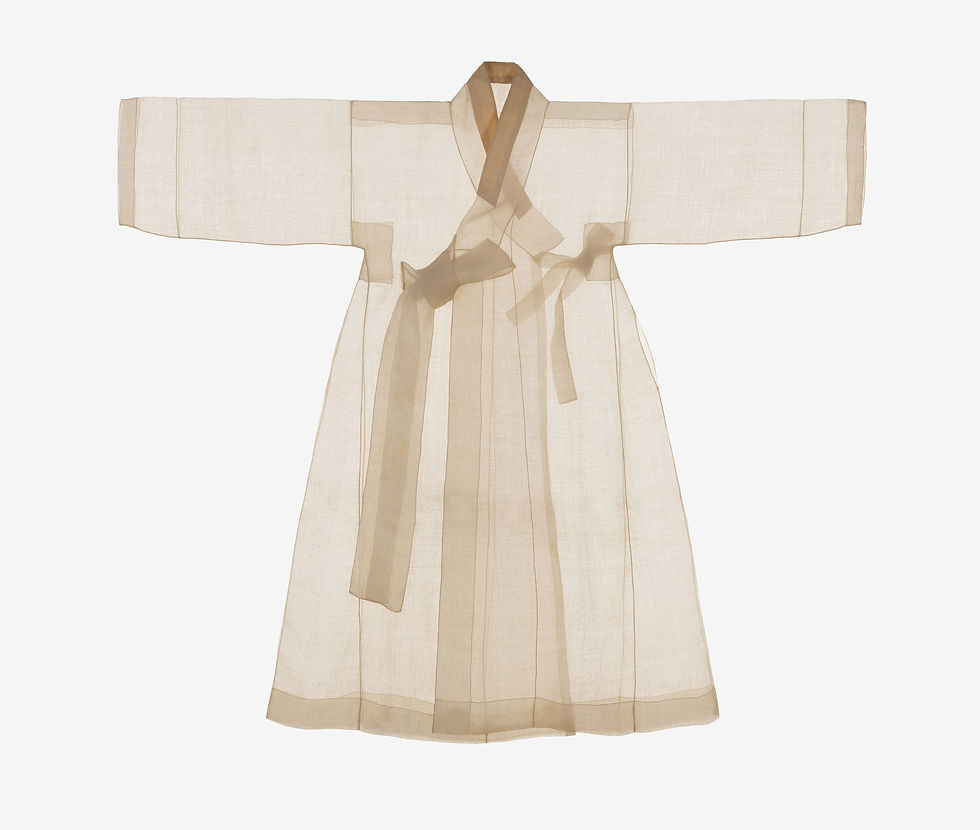
Interestingly, the traditional Korean idea of "white" was never limited to the brilliant white we often imagine today. Undyed cotton, hemp and ramie fabrics—known collectively as saek (素色), or natural colour—were also regarded as white. Soft ivory, warm cream and gentle beige all belonged to this broader understanding of whiteness.
Rather than representing an absence of colour, Korean white celebrates the natural beauty of materials in their original state.
Why White?
Modern scholars have also explored more practical reasons behind Korea's long tradition of wearing white.
In the past, producing cloth and making clothing required immense time and labour. Wearing undyed fabric was often the most practical and economical choice, eliminating the need for additional dyeing.
This does not mean that Koreans lacked dyeing techniques. Indigo, safflower, gardenia and many other natural dyes had been used for centuries, while royal garments, Buddhist paintings and traditional crafts display an impressive range of colours. Members of the royal court and government officials regularly wore richly coloured robes to express rank and authority.
Extended mourning customs, the Confucian virtue of modesty, and everyday economic realities all contributed to the widespread use of white clothing. In other words, the tradition was shaped not only by aesthetic preference but also by the practical circumstances and cultural values of Korean life.
The New Story of the White Hanbok
Although white hanbok is no longer everyday attire, it continues to evolve as one of Korea's most recognisable design languages. Today, K-pop and contemporary fashion have introduced new audiences around the world to the beauty of traditional Korean dress.
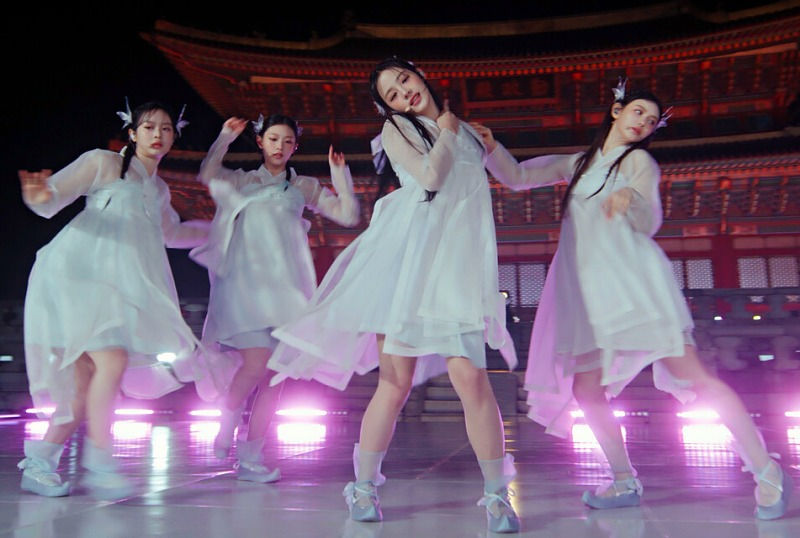
Artists including BTS, BLACKPINK and Stray Kids have appeared in performances and music videos wearing modern interpretations of white hanbok. Retaining the elegant lines of the jeogori and durumagi while incorporating contemporary tailoring and fabrics, these designs have brought Korean aesthetics to global audiences in fresh and innovative ways.
This continuing legacy is also recognised by London's Victoria and Albert Museum (V&A). Its landmark 2022 exhibition, <Hallyu! The Korean Wave>, presented the white hanbok of the late Joseon period as an important symbol of Korean culture, explaining that white came to represent purity, resilience, and, during the Japanese occupation, resistance.


The V&A's collection also includes works by contemporary hanbok designer Youngjin Kim (Tchai Kim). Using white linen and cotton, Kim reinterprets the graceful curves, flowing silhouettes and sense of space found in traditional hanbok, demonstrating how heritage and contemporary fashion can exist in harmony.

The recent K-drama Perfect Crown (2026) has also drawn attention for reinterpreting the silhouette of hanbok through a contemporary lens. By contrast, the film The King’s Warden (2026), released earlier this year, uses the white mourning robes worn by the exiled King Danjong to evoke purity, tragedy and sacrifice. Together, the two works show how the same white hanbok can carry entirely different stories and meanings depending on its time and context.
What was once everyday clothing has become a powerful cultural language—appearing on fashion runways, concert stages, television screens and in world-renowned museums, while continuing to express Korea's unique aesthetic identity.
Perfect Crown (2026) Watch in the UK: Disney+ |
A Colour That is Never Empty
Today, it is rare to see white hanbok worn in everyday life. Yet white remains one of the defining colours of Korean aesthetics, appearing not only in hanbok but also in white porcelain, architecture, painting, fashion and contemporary design.
The idea of Baegui Minjok should not be understood as meaning that Koreans always wore white. Rather, it reflects the many meanings that white has accumulated throughout Korean history and culture.
Korean white is never empty. Within it lie ancient beliefs, an appreciation of nature, ideals of simplicity and restraint, the realities of everyday life, and the memories of generations who endured changing times. More than simply a colour, it has become a lasting expression of Korea's history, identity and cultural spirit.
Editor S.
KOREAN
백의민족, 그 흰색의 진짜 의미
오늘날 세계에 알려진 한국의 전통 의복, 한복을 떠올리면 곱고 단아한 선과 함께 선명하고 화려한 색채가 먼저 떠오른다. 특히 왕실과 양반의 복식, 혼례나 의례를 위한 한복에는 신분과 의미에 따라 다양한 색과 장식이 사용됐다.
하지만 오래된 한국의 사진 속 풍경은 조금 다르다. 거리와 시장, 들판을 가득 채운 평범한 사람들의 옷은 놀라울 만큼 희다. 한국인들은 오랫동안 일상에서 흰옷을 즐겨 입었고, 이 때문에 ‘백의민족(白衣民族)’, 즉 ‘흰옷의 민족’이라 불리기도 했다.
그렇다면 왜 한국 사람들은 그토록 흰옷을 즐겨 입었을까?
단순히 흰색을 좋아했기 때문이라고 설명하기에는 그 안에 담긴 이야기가 훨씬 깊다. 고대의 신앙과 종교적 가치, 자연을 바라보는 미의식, 생활환경과 경제적 조건, 그리고 근대사의 경험까지 여러 요소가 오랜 시간 겹쳐져 있기 때문이다.
한국의 흰색은 단순한 옷의 색을 넘어, 오랜 세월 한국인의 삶과 역사, 정신을 담아온 문화적 상징이다.
기록 속의 백의민족
한국인이 흰옷을 입었다는 기록은 고대부터 등장한다. 3세기 중국 역사서 《삼국지》의 〈위지 동이전〉에는 부여 사람들이 흰색을 숭상하고 흰옷을 입었다고 기록되어 있으며, 이후 《수서》에도 신라 사람들이 흰옷을 즐겨 입었다는 내용이 전한다.
고려와 조선시대에도 흰옷은 널리 착용되었다. 조선을 방문한 외국인들은 거리에서 만나는 사람들 대부분이 흰옷을 입고 있다고 기록했으며, 이러한 모습은 한국을 대표하는 풍경 가운데 하나로 인식되었다.
역사적으로는 흰옷을 금지하려는 시도도 여러 차례 있었다. 동쪽에 위치한 나라는 음양오행에 따라 푸른색을 숭상해야 한다는 이유에서였고, 흰옷이 상복과 비슷하다는 비판도 있었다. 그러나 이러한 금지에도 흰옷 문화는 쉽게 사라지지 않았다.
일제강점기에 들어서면서 흰옷은 또 다른 의미를 갖게 된다. 일본은 흰옷을 낡고 비경제적인 풍습으로 규정하고 색깔 있는 옷을 장려했지만, 한국인들에게 흰옷은 오히려 민족의 정체성과 저항을 상징하는 복식이 되었다. 특히 1919년 3·1운동 당시 거리를 가득 메운 흰옷의 군중은 오늘날까지도 독립과 연대의 상징적인 장면으로 기억된다.
흰색의 의미
한국 문화에서 흰색은 오래전부터 하늘과 태양, 빛을 상징하는 신성한 색으로 여겨졌다. 고대 사회의 하늘 숭배와 태양 신앙은 흰색을 생명과 희망, 밝음의 색으로 인식하는 데 영향을 주었다.
이후 불교와 유교, 도교의 사상이 더해지면서 흰색은 욕망을 비우는 마음, 절제와 검소함, 자연 그대로의 아름다움을 상징하게 되었다. 이러한 가치들은 한국인이 오랫동안 추구해 온 미의식과도 맞닿아 있다.
흥미로운 점은 전통적인 한국의 '흰색'이 오늘날의 새하얀 순백색만을 의미하지 않았다는 것이다. 염색하지 않은 무명, 삼베, 모시의 자연스러운 색을 '소색(素色)'이라 불렀으며, 아이보리나 연한 베이지처럼 자연에서 얻은 은은한 색감까지 넓은 의미의 흰색으로 받아들였다.
따라서 한국의 흰색은 아무것도 없는 무색이라기보다, 재료 본연의 색과 자연스러운 아름다움을 드러내는 색에 가까웠다.
왜 흰색이었을까?
오늘날에는 흰옷 문화를 조금 더 현실적인 시각에서 바라보는 연구도 많다. 과거에는 옷감을 직접 짜고 옷을 만드는 데 많은 시간과 노동이 필요했기 때문에, 별도의 염색 과정을 거치지 않은 천을 그대로 사용하는 것이 가장 실용적인 선택이었을 수 있다.
그렇다고 한국에 염색 기술이 없었던 것은 아니다. 한국인은 오래전부터 쪽, 홍화, 치자 등 다양한 천연염료를 사용했으며, 왕실 복식과 불화, 공예품에는 다채로운 색이 사용되었다. 실제로 왕실과 관리들은 신분과 권위를 나타내기 위해 붉은색, 푸른색, 녹색 등 화려한 복식을 착용했다.
긴 상례와 제례 문화, 검소함을 미덕으로 여긴 사회 분위기, 그리고 경제적 현실 역시 흰옷이 널리 입히는 데 영향을 주었다. 다시 말해 흰옷은 단순한 취향이 아니라, 한국인의 생활방식과 가치관이 함께 만들어 낸 문화였다.
흰 한복의 새로운 이야기
오늘날 흰 한복은 더 이상 일상복은 아니지만, 한국을 대표하는 디자인 언어로 새롭게 해석되고 있다. 특히 K-pop과 현대 패션은 전통 한복의 아름다움을 세계에 알리는 중요한 역할을 하고 있다.
BTS, BLACKPINK, Stray Kids 등 많은 K-pop 아티스트들은 공연과 뮤직비디오에서 흰 한복을 현대적으로 재해석한 의상을 선보여 왔다. 전통적인 저고리와 두루마기의 선을 유지하면서도 현대적인 소재와 실루엣을 더한 디자인은 한국적인 미감을 세계 무대에 소개하는 새로운 방식이 되었다.
이러한 흐름은 런던의 Victoria and Albert Museum(V&A) 에서도 확인할 수 있다. 2022년 열린 <Hallyu! The Korean Wave> 전시는 조선 후기의 흰 한복을 한국 문화의 중요한 상징으로 소개하며, 흰색이 순수함(Purity) 과 회복력(Resilience) 을 상징하고, 일제강점기에는 저항(Resistance) 의 의미까지 담게 되었다고 설명했다.
V&A가 소장한 현대 한복 디자이너 김영진(Tchai Kim) 의 작품 역시 이러한 전통을 이어간다. 흰 리넨과 면 소재를 사용해 한복 특유의 곡선과 여백의 미를 현대적인 디자인으로 재해석한 그의 작품은 전통과 현대가 어떻게 공존할 수 있는지를 보여준다.
최근 방영된 드라마 <21세기 대군부인 (2026)> 역시 한복의 실루엣을 현대적인 감각으로 재해석해 주목받았다. 반대로 올해 초에 영화에서 개봉했던 영화 <왕과 사는 남자 (2026)> 에서는 유배된 단종이 입은 흰 상복을 통해 순결과 비운, 희생이라는 상징성을 섬세하게 표현한다. 같은 흰 한복이라도 시대와 작품에 따라 전혀 다른 이야기를 담아낼 수 있음을 보여주는 사례다.
수백 년 전 사람들의 일상복이었던 흰 한복은 이제 런웨이와 공연 무대, 드라마와 영화, 그리고 세계적인 박물관에서 한국의 미학과 정체성을 이야기하는 문화 언어로 계속 진화하고 있다.
비어 있지 않은 흰색
오늘날 한국의 거리에서 흰 한복을 일상적으로 입는 모습은 거의 찾아보기 어렵다. 그러나 흰색은 여전히 한복과 백자, 건축, 회화, 패션과 현대 디자인에서 한국적인 미감을 보여주는 중요한 색으로 사용되고 있다.
한국의 흰색에는 하늘과 빛을 숭상한 믿음, 자연 그대로의 아름다움, 비움과 절제를 중요하게 여긴 정신이 담겨 있다. 동시에 옷을 만들고 세탁했던 사람들의 노동과 경제적 현실, 식민지 시대의 저항과 민족적 기억도 함께 존재한다.
따라서 ‘백의민족’이라는 말은 한국인이 언제나 흰옷만 입었다는 뜻으로 이해하기보다, 한국인이 오랜 시간 흰색에 부여해 온 다양한 의미를 보여주는 표현으로 바라볼 필요가 있다.
한국의 흰색은 비어 있는 색이 아니다. 그것은 역사와 생활, 정신과 기억이 여러 겹으로 쌓인 색이다.


