Like a Smiling Roof Tile
Updated: Sep 4
ART & CRAFT
Long ago in Silla,
people must have built houses with smiling roof tiles
and lived in houses that smiled.
One tile has fallen from under the eaves,
one side of its face cracked and broken,
yet its smile remains unbroken,
smiling like a crescent moon hidden behind leaves.
I too want to leave behind a smile that lasts a thousand years for someone,
so I try imitating the smiling roof tile.
Poet Yi Bong-jik, "Smiling Roof Tile"

This children's poem was inspired by the national treasure 'Face-Patterned Water Eave Tile' on display at the Gyeongju National Museum.

(As of March 2026) Just as eye-catching as the two actors standing in the center of the poster for the film The King’s Warden (The Man Who Lives with the King), which is racing toward 10 million viewers, is the roof tile pattern stretching behind them. The gently curving roofline above the central gate, the symmetrical arrangement of concave (female) and convex (male) tiles creating depth, and the overall gray tone showcase the iconic silhouette of hanok architecture.

At Gyeongbokgung Palace - one of the first places foreign visitors to Seoul head to—the roof tiles leave the strongest impression. Stand in the courtyard in front of Gyeongbokjeon Hall after passing through Gwanghwamun Gate, look up, and you'll see layers of tiles stepping down toward the back, creating a sense of depth. Unlike the straight stone roofs of Western architecture, Gyeongbokgung's tile roofs form a "gentle staircase" silhouette with their slightly curved eaves and repeating patterns.
The smiling Silla tile, the scene from the poster, and the roof tiles gazed up at from Gyeongbokgung's courtyard all pose the same question: Why do hanok roofs curve so softly? Why insist on stacking heavy fired-clay tiles in what might seem an inefficient structure? These questions reveal that Korean roof tiles embody material, structure, and symbolism as a cornerstone of Korean architecture.
Korean traditional roof tiles are not mere roofing but an earth-based system designed to protect wooden structures in humid, cold climates. Clay is kneaded by foot, molded in forms, and fired in high-temperature kilns, resulting in tiles with hard surfaces but porous interiors. These pores absorb rainwater and release it gradually, resisting freeze-thaw cycles and stabilizing indoor humidity.

Hanok roofs consist of flat tiles formed by alternating concave amgiwa (concave rectangular tiles) and sugiwa (convex semi-cylindrical tiles). Amgiwa channels rainwater into valleys, while sugiwa caps them to prevent leaks, creating both a wave-like rhythm and an efficient drainage system.
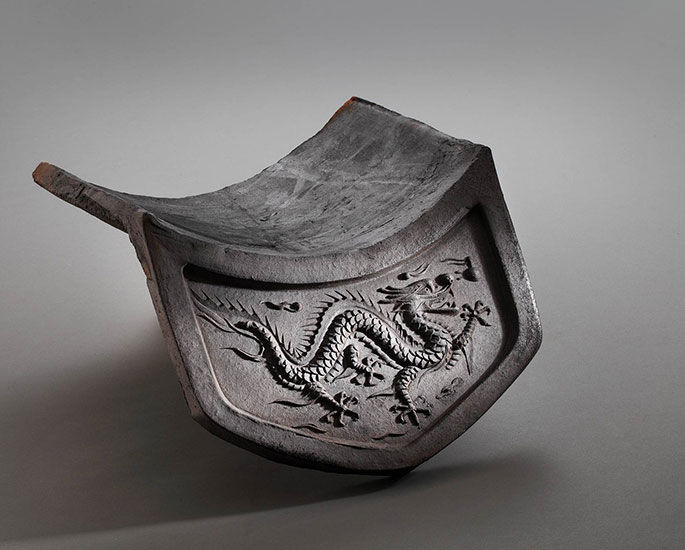

What Eave Tiles and Ridge Caps Reveal
Like the "smiling tile," the maksaegiwa (eave-end tiles) at the roof edges are hanok's most striking details. Round sumaksaegiwa and truncated ammaksaegiwa are engraved with lotus flowers, clouds, characters, goblin faces, and more, signaling the building's hierarchy and era. At the roof's highest ridge (yongmaru), decorative tiles like mangwa, chudu, and figurines ward off evil spirits while symbolizing authority.
With this knowledge, roof tiles transcend mere silhouette to become a "readable facade." Just as Gothic cathedrals' spires and gargoyles reveal era and character, Korea's maksaegiwa and yongmaru serve the same narrative role.
Places to Experience Korean Roof Tiles
Bukchon Hanok Village: Seoul's Iconic Sloped Alleys
Bukchon Hanok Village features densely packed hanok roofs along hilly lanes, ideal for photography and strolls.

Bukchon Hanok Village
37 Gyedong-gil, Jongno-gu, Seoul, South Korea (Postal Code: 03059)
Eunpyeong Hanok Village & Eunpyeong History Hanok Museum
Paired with a hanok village, this museum offers artisan-led programs on tile-making, types, and restoration.

Eunpyeong Hanok Viallage
Experience "scenic hanok (Bukchon)" and "structural understanding (Eunpyeong)" together for photos and knowledge in one day.
Jeonju Hanok Village: A Dense Cluster of Tile Roofs
Hundreds of tile-roofed hanoks define this premier traditional district, from entrance gates to historic buildings. Stroll alleys lined with varying scales and shapes, with cafés, guesthouses, and teahouses offering interior access. Recommend +1Stay overnight for nighttime silhouettes contrasting daytime views.

Jeonju Hanok Village
99 Girin-daero, Wansan-gu, Jeonju-si, Jeonbuk State, South Korea
Connecting London to Seoul: A Tile Journey
London: British Museum's Korean Gallery for hanok models and tile basics.n
Seoul Day 1: Bukchon stroll → Eunpyeong Museum lectures and exhibits.
Regional 1-2 Days: Jeonju for streetscapes and overnight hanok stays.
This route progresses from "exhibit → structure → real streets and living spaces," fully decoding Korean tiles as architectural language.

In Closing: Like a Smiling Tile
To those in the UK dreaming of hanok travels, Korea's warm tile roofs will welcome you with gentle curves. Leave a smile that lasts a millennium, just like poet Yi Bong-jik.
Editor W.
KOREAN
웃는 기와처럼
옛 신라 사람들은
웃는 기와로 집을 짓고
웃는 집에서 살았나 봅니다.
기와 하나가 처마 밑으로 떨어져
얼굴 한 쪽이
금 가고 깨졌지만
웃음은 깨지지 않고
나뭇잎 뒤에 숨은
초승달처럼 웃고 있습니다.
나도 누군가에게
한번 웃어주면
천 년을 가는
그런 웃음을 남기고 싶어
웃는 기와 흉내를 내 봅니다.
이봉직 시인 <웃는 기와>
이 시는 경주 박물관에 전시되어 있는 보물 '얼굴무늬 수막새' 를 모티브로 지어진 동시입니다.
(26년 3월기준) 천만관객을 향해 달려가는 영화 ‘왕과 사는 남자’의 포스터 중앙에 서 있는 두 배우만큼이나 눈에 띄는 건, 그 뒤로 이어지는 기와지붕이죠. 중앙의 대문 위로 완만하게 휘어진 지붕선, 좌우로 대칭을 이루며 깊이를 만드는 암·수키와의 배열, 그리고 전체를 덮은 회색빛 톤이 한옥 건축의 전형적인 실루엣을 보여줍니다.
서울을 찾는 외국인들이 가장 먼저 방문하는 장소 중 하나인 경복궁에서도 기와지붕은 가장 강렬한 인상을 주는데요. 정문인 광화문을 지나 근정전 앞마당에 서서 고개를 들면,겹겹이 겹쳐진 기와들이 뒤로 갈수록 낮아지며 깊이를 만들어 냅니다. 서양의 직선적인 석조 지붕과 달리, 경복궁의 기와지붕은 살짝 휘어진 처마와 반복되는 패턴으로 ‘부드러운 계단’ 같은 실루엣을 만들어 냅니다.
신라시대의 웃는 기와, 포스터 속 한 장면, 그리고 경복궁 마당 위에서 올려다본 기와지붕은 같은 질문을 던집니다. 왜 한옥의 지붕은 이렇게 부드러운 곡선을 그리고 있을까? 왜 흙으로 구운 무거운 타일을 겹겹이 올려, 비효율적으로 보일 수도 있는구조를 고집했을까?
이 물음들에서 한국 기와는 재료, 구조, 상징을 모두 품은 한국의 건축적인 상징으로서의 의미를 가진다는 것을 알 수 있죠.
한국 기와, 한옥 지붕 위의 ‘숨은 엔지니어링’
한국 전통 기와는 단순한 지붕재가 아니라, 습하고 추운 기후에서도 목조 건축을 보호하도록 설계된 흙 기반 시스템입니다. 점토를 밟아 반죽하고 틀에 성형한 뒤 고온 가마에서 소성하면, 표면은 단단하지만 내부는 미세한 기공을 가진 기와가 완성됩니다. 이 기공 덕분에 기와는 비를 머금었다가 다시 방출하며 동결·융해에 강해지고, 실내 온습도 변화도 완화합니다.
한옥 지붕은 암키와(오목한 장방형 기와)와 수키와(볼록한 반원형 기와)가 번갈아 배열된 평기와로 이루어집니다. 암키와는 빗물이 흐르는 골을 만들고, 수키와는 그 위를 덮어 누수를 막으며, 전체적으로 물결 같은 리듬과 명확한 배수 체계를 동시에 구현합니다.
디테일 읽기: 막새와 용마루가 말해주는 것들
웃는 기와와 같은 처마 끝의 막새기와는 한옥에서 가장 눈에 띄는 디테일입니다. 원형 수막새와 잘린 형태의 암막새에는 연꽃, 구름, 문자, 도깨비 얼굴 등 다양한 문양이 새겨져 건물의 위계와 시대 감각을 드러냅니다. 지붕의 가장 높은 선인 용마루에는 망와, 취두, 잡상 같은 장식 기와가 올라가 악귀를 막고 권위를 상징하는 장치로 기능합니다.
이런 요소들을 알고 보면, 기와지붕은 단순한 실루엣을 넘어 ‘읽을 수 있는 파사드’가 됩니다. 영국의 고딕 성당에서 첨탑·가고일을 통해 건물의 시대와 성격을 읽듯, 한국에서는 막새와 용마루가 같은 역할을 한다고 볼 수 있죠.
한국기와를 경험할 수 있는 곳
북촌한옥마을: 서울 도심 속 경사진 골목을 따라 기와지붕 한옥이 빼곡히 이어진 지역으로, 사진 촬영과 산책에 최적입니다.
은평한옥마을 & 은평역사한옥박물관: 한옥마을과 함께 전통 건축을 설명하는 전문 박물관이 있어, 기와의 제작법·종류·보수 과정을 장인 프로그램과 함께 배울 수 있습니다.
“풍경으로 보는 한옥(북촌)”과 “구조를 이해하는 한옥(은평)”을 함께 경험하면, 아름다운 사진과 지식을 한 번에 얻을 수 있겠죠.
전주한옥마을은 수백 채의 기와집이 밀집된 대표적인 전통 거리로, 입구부터 톨게이트·역사 건물까지 한옥형 지붕이 도시의 아이덴티티를 형성합니다. 골목을 따라 걸으면 서로 다른 규모와 형태의 기와지붕이 이어지며, 카페·게스트하우스·전통 찻집이 한옥 내부 경험을 제공합니다.
한옥 민박을 선택하면, 밤에 기와지붕 라인이 실루엣으로만 남는 풍경을 볼 수 있어 낮과 또 다른 인상을 받을 수 있으니 추천합니다.
한국 기와의 ‘생활 공간’ 느낌을 보고 싶다면, 이처럼 비교적 상업화가 덜 된 마을이 좋은 선택입니다. 해설사 투어를 신청하면 각 집의 역사와 기와의 보수 과정까지 설명을 들을 수 있으니까요.
런던과 서울을 잇는 기와
런던: British Museum 한국실에서 한옥 모형과 기와 장식의 기본 구조를 보고,
서울 1일차: 북촌한옥마을 산책 → 은평역사한옥박물관에서 구조·제작 강연 및 전시 관람.
지방 1~2일 연장: 전주한옥마을 또는 개평한옥마을에서 기와지붕을 ‘거리 전체의 풍경’으로 경험, 한옥 스테이로 밤 풍경까지 체험합니다.
이 루트로 보면, “전시 → 구조이해 → 실제 거리와 생활공간”까지 단계적으로 연결되어, 한국 기와를 하나의 건축 언어로 이해하기에 충분한 여정이 되겠죠?
마무리: 웃는 기와처럼
영국에서 한국의 한옥을 상상하며 여행계획을 세우는 당신에게 한옥의 따듯한 기와지붕은 부드러운 곡선의 미소로 환영할 겁니다. 한 번 웃어주면 천 년간 남는 '신라의 미소' , 그 미소를 기억하며 떠나보세요. 마치 이봉직 시인의 시처럼....


