Chaekgeori: Korea’s Still Life
ART & CRAFT

A Quiet Kind of Beauty
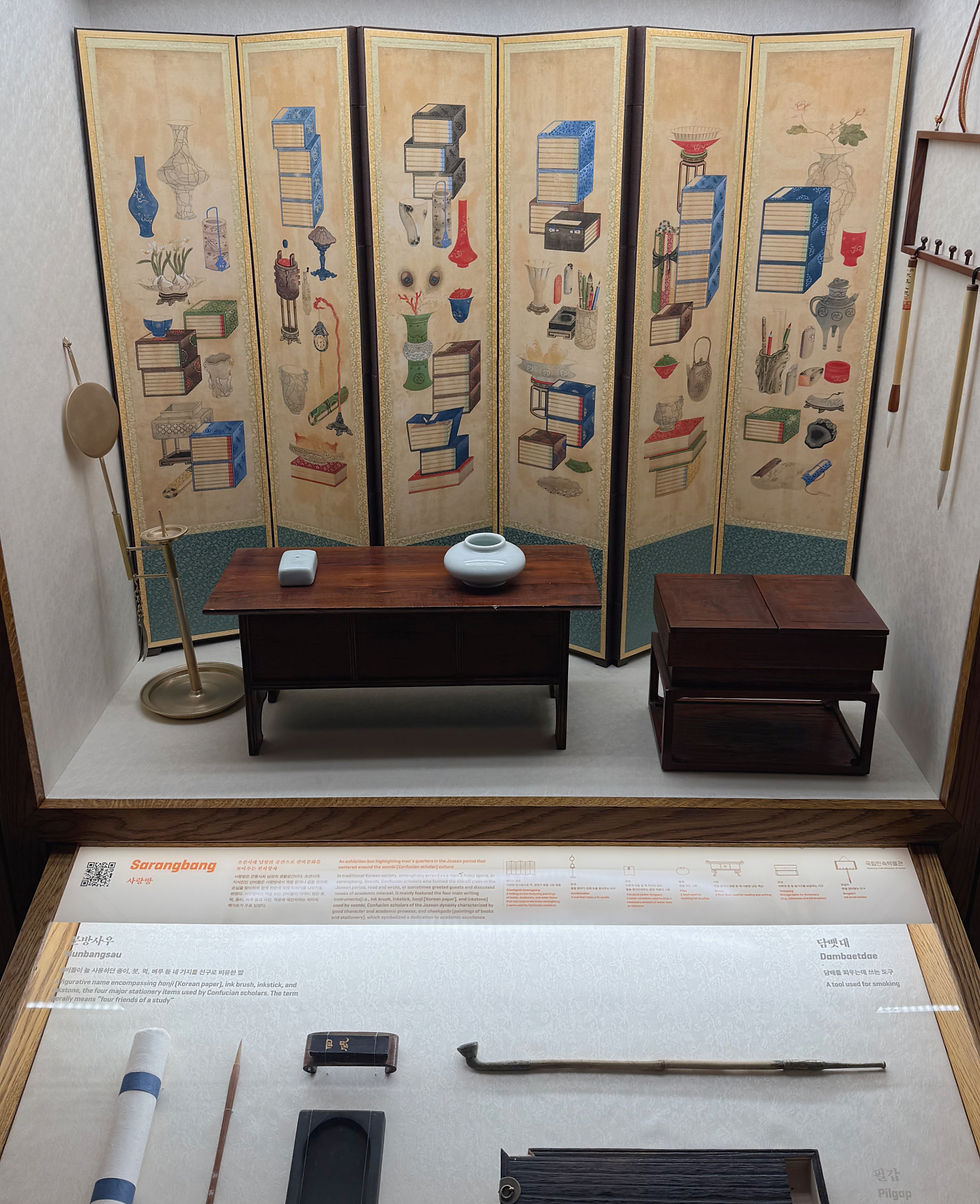
At the Korean Cultural Centre UK in London, there is a small room that recalls the sarangbang, the study room in a traditional Korean house. Like that intimate space, the folding screen at the back of the room holds a still life that may feel slightly unfamiliar to viewers accustomed to Western still life, yet it draws the eye with quiet ease. Different in form, materials and subject matter from Western still life, this painting is chaekgado, also known as chaekgeori, a distinctive still-life genre from Joseon-era Korea. Similar forms existed in Europe and China as well, but chaekgeori developed a distinctly Korean character by centring books and unfolding the sense of three-dimensional objects across a flat surface.
Chaekgeori flourished in the late Joseon period, and King Jeongjo’s love of books played an important role in that rise. Seeing books not simply as objects but as symbols of learning, governance and a cultivated way of life, Jeongjo actively supported the genre and commissioned court painters to produce chaekgeori screens. From the royal court, chaekgeori spread to the sarangbang of elite households and eventually into ordinary homes, where it came to be widely loved.
Symbols of a Well-Lived Life
At first, it can seem busy. Books, brushes, inkstones, porcelain and fruit fill the frame, arranged across a flat surface with remarkable density. Yet the painting never feels crowded. The longer you stay with it, the more it begins to feel like a quiet wish for a well-lived life. Books suggest learning; writing tools point to study and self-cultivation; fruits such as peaches, pomegranates and grapes carry wishes for longevity, prosperity and abundance.
That balance between object and meaning is what gives chaekgeori its appeal. It is a still life, certainly, but one that speaks gently about values, taste and an ordered way of living.
Among the court painters associated with chaekgeori, Jang Han-jong and Yi Taek-gyun are especially notable. Jang Han-jong’s Chaekgado is often cited among the early court examples of the genre, while Yi Taek-gyun’s late nineteenth-century folding screens, including the Cleveland Museum of Art’s Books and Scholars’ Accoutrements, are admired for their dense composition, rich colour and refined decorative detail.

A Tradition That Still Feels Current

Chaekgeori has not remained a thing of the past. Contemporary minhwa artists return to its traditional structure and rework it by stripping back colour or introducing new objects, giving this old genre a contemporary rhythm. Its power lies in the fact that, even after several centuries, it still reads as modern.
Among contemporary artists, Kim Nam-kyoung and Hong Kyoungtack are worth noting. Kim Nam-kyoung draws on the structure of chaekgado to express personal memories and inner worlds on fabric and metal leaf, while reinterpreting the genre through a contemporary sensibility. Kyoungtack Hong’s Library 3 offers another contemporary take on chaekgeori. By filling the canvas with a dense array of familiar objects, he expands the genre’s sense of arrangement and collection, while also suggesting the layered logic of contemporary visual culture.
This movement extends beyond painting as well. Chaekgeori and minhwa imagery now appears naturally in museum goods, art prints, posters and everyday objects, becoming a visual language that has moved beyond the gallery wall and into daily life.


Where to Tind It in London
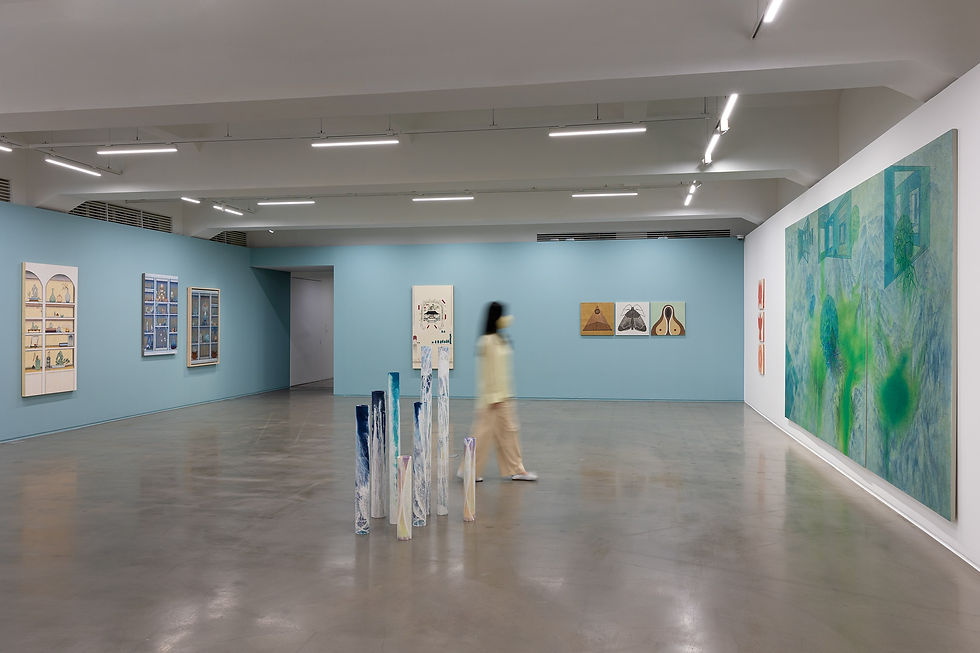
If you would like to encounter chaekgeori and minhwa in London, Han Collection is a good place to begin, whether through its gallery or website. Founded in London in 2006, Han Collection has introduced Korean art, antiques and craft to an international audience from its Bloomsbury base. It is a space that continues to show how Korean aesthetics can be read in a contemporary setting. The Korean Cultural Centre UK is another strong starting point. In the summer of 2026, it is presenting Korean Traditional Painting in Alter-age: Pure and Hybrid, an exhibition that brings together Korean traditional painting from the late Joseon period to the twentieth century alongside the work of contemporary artists. It is not an exhibition devoted exclusively to chaekgeori, but it offers a valuable opportunity to understand minhwa and traditional Korean painting within a broader artistic context.
Han Collection 10 Bury Place, Bloomsbury, London WC1A 2JL Korean Cultural Centre UK Korean Cultural Centre UK, Grand Buildings, 1 - 3 Strand, London WC2N 5BW https://kccuk.org.uk/en/ |
A Painting That Still Speaks
This is a painting born from a society that loved books, yet it speaks to us today through the language of design and everyday life. At a time when digital platforms and AI have made it increasingly common to consume summaries rather than read books directly, chaekgeori reminds us of the place of books, study and reflection on a single, carefully composed surface. That quiet endurance is perhaps why chaekgeori still feels so compelling today.
Editor H.
KOREAN
책거리, 한국의 정물화
조용히 시선을 끄는 낯선 정물화
영국 런던의 주영한국문화원(KCCUK)을 찾으면, 사랑방을 떠올리게 하는 작은 공간이 있다. 그 사랑방을 품듯 방 뒤에 자리한 병풍 속 정물화는 서양의 정물화에 익숙한 사람들에게는 조금 낯설지만 편안하게 시선을 끈다. 형식과 재료, 주제에서 서양 정물화와 결이 다른 이 그림은 한국 전통의 책가도, 즉 책거리라 불리는 조선 시대의 정물화다. 서양과 중국에도 이와 비슷한 형식의 그림은 있었지만, 책거리는 책을 중심으로 3차원적 사물의 감각을 평면 위에 펼쳐 보이며 조선 후기 한국만의 독자적인 화풍을 이룬 그림이다.
책거리는 조선 후기 크게 부흥했는데, 그 배경에는 정조의 책 사랑이 있었다. 정조는 책을 단순한 물건이 아니라 학문과 정치, 그리고 삶의 태도를 비추는 상징으로 보았고, 궁중 화원들에게 책거리를 그리게 하며 이를 적극적으로 후원했다. 그 영향으로 책거리는 궁중의 장식에서 출발해 양반가의 사랑방으로, 다시 일반 민가의 생활공간으로 옮겨가며 폭넓은 사랑을 받게 되었다.
좋은 삶을 상징하는 사물들
화면은 평면적이고 사물은 빼곡하지만, 이상하게 답답하지 않다. 책거리 속 사물들은 저마다 뜻을 지닌다. 책은 학문과 교양을, 붓과 벼루 같은 문방사우는 배움과 수양을, 석류와 포도는 다산과 번영을, 복숭아는 복과 장수를 상징한다. 그래서 책거리는 단순한 정물화가 아니라, 좋은 삶에 대한 바람을 한 화면에 정갈하게 담아낸 그림처럼 보인다.
책거리는 책을 중심으로 문방사우와 다양한 기물을 함께 배치한 그림이다. 겉으로는 사물의 배열처럼 보이지만, 그 안에는 학문, 평안, 번영, 그리고 취향에 대한 바람이 담겨 있다. 그래서 책거리는 단순히 보는 그림을 넘어, 한 사람의 삶의 태도와 이상을 읽게 만든다. 서양 정물화가 빛과 질감, 사물의 아름다움에 집중한다면, 책거리는 물건 하나하나에 뜻을 부여하는 방식으로 다른 매력을 발한다.
대표적인 궁중화풍 책가도로는 장한종의 「책가도」를 들 수 있다. 또한 19세기 후반 궁중화원 이택균의 책가도 병풍은 치밀한 구도와 깊은 색채, 정교한 장식성으로 잘 알려져 있어 책거리 전통의 대표작으로 자주 언급된다.
전통이 현재형이 되는 방식
책거리는 과거의 그림으로만 남아 있지 않다. 현대 민화 작가들은 전통적인 구성을 바탕으로 색을 덜어내거나 새로운 오브제를 더해, 오래된 장르에 오늘의 감각을 입힌다. 몇 세기를 지나왔지만 여전히 현대적으로 읽힌다는 점이야말로 책거리의 힘이다.
현대 작가들 가운데서는 김남경과 홍경택이 특히 눈에 띈다. 김남경은 책가도의 구조를 바탕으로 천과 금박 위에 기억과 내면의 풍경을 풀어내며, 전통의 형식을 동시대적인 감각으로 새롭게 해석한다. 홍경택의 「Library 3」은 책거리의 또 다른 현대적 변주를 보여준다. 화면 가득 빼곡하게 쌓인 익숙한 사물들은 책거리 특유의 배열과 수집의 감각을 확장하는 동시에, 오늘의 시각문화가 지닌 층위와 밀도를 떠올리게 한다.
이 흐름은 회화 밖으로도 번지고 있다. 책거리와 민화 이미지는 박물관 굿즈, 아트 프린트, 포스터, 생활 소품 등 실용적 형태로 자연스럽게 확산되고 있다. 이제 책거리는 전시장 안에서 감상하는 그림을 넘어, 생활 속으로 스며드는 시각 언어가 되었다.
런던에서 만나는 책거리
런던에서 책거리와 민화를 접하고 싶다면 먼저 Han Collection 갤러리나 웹사이트를 찾아보자. Han Collection은 2006년 런던에서 설립되어 한국 미술과 골동, 공예를 국제 관객에게 소개해온 공간으로 블룸즈버리에 자리하고 있다. 한국적 미감이 오늘날 어떻게 읽힐 수 있는지를 꾸준히 보여주는 곳이어서 책거리와 민화를 접하기에 좋은 곳이다.
주영한국문화원도 좋은 출발점이다. 2026년 여름에는 《Korean Traditional Painting in Alter-age: Pure and Hybrid》 전시가 열려 조선 후기부터 20세기에 이르는 한국 전통 회화와 동시대 작가들의 작업을 함께 소개한다. 책거리만을 전면에 내세운 전시는 아니지만, 한국 회화의 흐름 속에서 민화와 전통 회화의 맥락을 함께 이해하기에 좋은 자리다.
여전히 사랑받는 그림
책을 사랑했던 사회가 만든 그림이 오늘의 디자인 언어와 생활 감각으로 다시 살아나 우리에게 말을 건넨다. 디지털 플랫폼과 AI의 확산으로, 많은 사람이 직접 책을 읽기보다 다른 사람이 해설하거나 요약한 내용만 소비하는 일이 늘고 있다. 그런 변화가 독서량을 줄이고 긴 글을 깊게 읽는 능력에 대해 우려를 낳는 지금, 책거리는 책과 공부, 사유의 자리를 한 화면에 정갈하게 보여준다. 그 조용한 지속성이 책거리가 오늘날에도 매력적인 이유일 것이다.