The Art of Luminous Light: Mother-of-Pearl and Najeonchilgi
ART & CRAFT
Mother-of-pearl, known in Korean as jagae, is born deep within the ocean. Crafted from the inner shells of abalone, conch, and pearl oysters, it is refined into thin, iridescent pieces that capture light and shimmer with subtle color. From this luminous material begins one of Korea’s most sophisticated traditional art forms: najeonchilgi, lacquerware inlaid with mother-of-pearl.
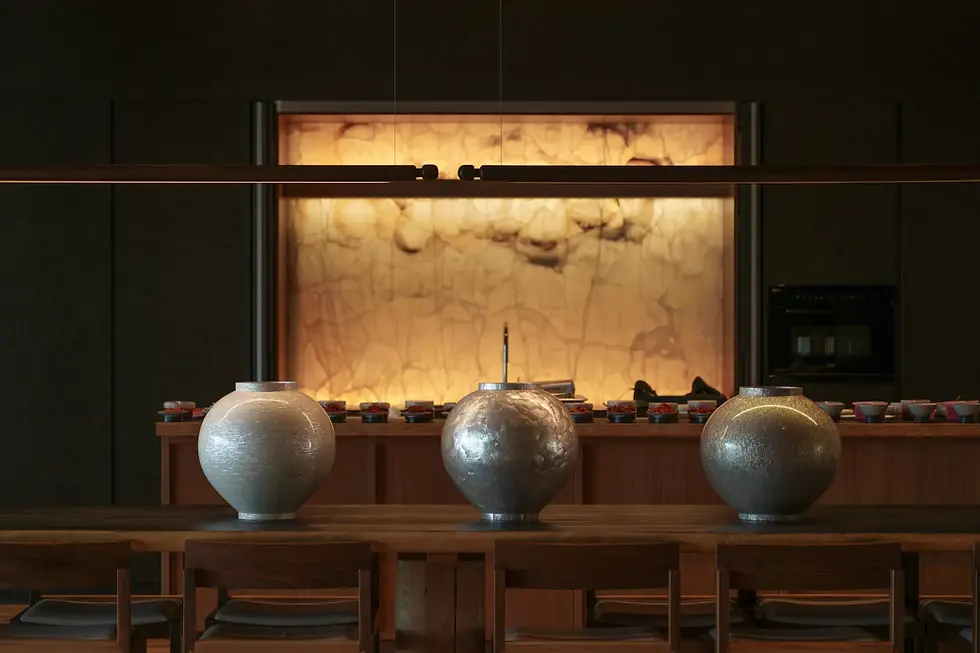
Najeonchilgi (螺鈿漆器) is a traditional technique that decorates furniture and household items with delicately sliced shells. This craft originated in the Goryeo dynasty and reached its height during Joseon, admired for its dazzling rainbow sheen that changes with the light. Each piece reflects both the refinement of Korean artisanship and the enduring beauty of time.
More than mere decoration, najeonchilgi is a dialogue between light, material, and human touch. Artisans embed tiny fragments of jagae into lacquered wood, transforming light into pattern and texture. While jagae, the native Korean word, evokes the natural luster of shells, the Sino - Korean term najeon (螺鈿) - derived from the characters for 'conch' and 'ornamental inlay' - literally describes the act of setting brightness into an object. If jagae is raw light, then najeonchilgi is that light given form.
The Precision Behind the Craft
© MOTHER-OF-PEARL WORKER | NAMYANGJU, SOUTH KOREA
Traditional mother-of-pearl craftsmanship is a study in patience and precision. The process involves woodworking, design planning, grinding the shell to a thinness of about 0.1mm, layering lacquer, attaching the inlay, and polishing through seven to ten coats of finish. Thousands of tiny fragments are placed by hand, sometimes over weeks or months, demanding the utmost discipline and artistry.
Over time, these pieces gain a deeper, more haunting luster—the light, as if transforming into a physical memory of time itself.
Today, the allure of najeonchilgi has reemerged under the wave of “newtro”—a cultural movement that blends nostalgia with modern design. The elegance once confined to traditional furniture now shines in café interiors, restaurant décors, and contemporary furniture. The craft’s iridescent glow continues to transcend era and space, reimagined for the modern eye yet grounded in centuries of artistry.
The Revival of a Timeless Aesthetic
© Milan Design Week, the exhibition Mother-of-Pearl Tables
Mother-of-Pearl Tables: A Collaboration Between Global Designers and Tongyeong Artisans
At Milan Design Week, the exhibition Mother-of-Pearl Tables offered a striking showcase of Korean lacquer artistry on the world stage. Global designers; Marcel Wanders, Stefano Giovannoni, and Elena Salmistraro collaborated with master craftsmen from Tongyeong, a city renowned since the Joseon era for its shell inlay tradition. Together, they reinvented the language of jagae, transforming traditional abalone shells into bold, organic, and modern forms.
The six participating designers worked side by side with Tongyeong artisans, merging meticulous handcraft with a contemporary spirit. Wanders’ fluid silhouettes, Giovannoni’s playful details, and Salmistraro’s vivid patterns revealed a dynamic harmony between East and West.
Displayed at the Triennale Milano, the Mother-of-Pearl Tables captivated audiences, proving that traditional craft can evolve into a modern design language. The soft gleam of jagae in sleek, minimal spaces suggested a new potential for cultural craftsmanship reviving ancient techniques with fresh relevance. Each piece, while undeniably modern, carried within it the memory of the sea and the quiet rhythm of time.
Seoul’s Newtro Charm — Where Tradition Meets Trend


In Seoul, jagae has become a symbol of newtro aesthetics. From the nostalgic Coffee Hanyakbang café on the historic site of Hyeminseo, to trendsetting spots in Gangnam and Haebangchon, mother-of-pearl details now illuminate interiors that marry vintage charm with modern design.
Once associated with grandmother’s furniture, jagae now sits at the heart of edgy, urban spaces—beloved by a generation that celebrates the beauty of the past through contemporary eyes.
London: East Meets Elegance


In London’s Covent Garden, SOOM offers a premium Korean BBQ experience, framed by interiors that reinterpret the serene aesthetics of the hanok in a modern language. The ground-floor bar features celadon vases, hanji-wrapped counters, and radiant mother-of-pearl art panels, while the underground dining hall glows with folding screens, carved wooden ceilings, and the symbolic jeong (井) motif—evoking unity and shared warmth.
SOOM’s design speaks of cultural synthesis: a quiet meeting of London’s cosmopolitan edge and the subtle elegance of Korean tradition.
Epilogue — Light That Holds Time
The allure of jagae interiors lies in the meeting of history and light—a harmony where the past breathes within the present. Its shifting hues bring spaces to life, infusing them with emotional warmth and understated sophistication.
A single piece of mother-of-pearl can transform a room, embodying Korean aesthetics and timeless craftsmanship. In Seoul’s nostalgic cafés, it rekindles memory and affection; in London’s refined restaurants, it reveals the grace of the East.
Today, jagae is more than material—it is a cultural language of light.
To feel the passage of time within its iridescent glow—that may be the greatest gift mother-of-pearl has to offer.
Editor W.
KOREAN
빛을 품은 예술, 자개와 나전칠기
자개와 나전칠기? 무엇이 다를까요?
자개, 한국어로 jagae라 부르는 이 아름다운 재료는 바다 깊은 곳에서 태어납니다. 전복, 소라, 진주조개 같은 조개의 속껍질에서 만들어져, 얇고 영롱한 빛을 품은 조각으로 정제되죠. 이렇게 다듬어진 자개는 한국의 가장 섬세한 전통 예술 중 하나인 나전칠기의 출발점이 됩니다.
반면 나전칠기 (螺鈿漆器)는 전복, 진주조개, 소라 등의 껍데기를 얇게 가공해 가구나 소품을 장식하는 전통 공예 기법입니다. 고려 시대에 시작되어 조선 시대에 절정을 이룬 나전칠기는 보는 각도에 따라 무지갯빛으로 변하며, 고유한 우아함과 깊이를 전합니다.
이렇듯 나전칠기는 단순한 장식이 아니라, 빛과 재료, 그리고 장인의 손끝이 함께 만들어내는 예술입니다. 장인은 옻칠한 나무 위에 자개의 조각을 정성스럽게 새겨 넣어, 빛을 머금은 무늬를 탄생시키죠. 순우리말 자개가 조개껍질의 자연스러운 영롱함을 떠올리게 한다면, 한자어 나전(螺鈿)은 ‘소라’와 ‘비녀 장식’을 뜻하며 빛을 박아 넣는 행위를 뜻합니다.
즉, 자개는 ‘빛의 원료’, 나전칠기는 '그 빛이 형태를 얻은 예술'이라고 정의할 수 있습니다.
자개공예의 정교함
전통 자개 공예는 목재 가공, 디자인 설계, 자개 얇게 갈기(0.1mm 수준), 옻칠 접착, 반복 옻칠(7~10회), 연마의 과정을 거칩니다. 수작업 중심으로 수천 조각을 부착하며, 수주에서 수개월이 소요되는 장인의 인내와 감각이 작품의 품질을 좌우합니다.
이렇게 완성된 자개 공예품은 시간이 지날수록 더욱 깊고 영롱한 빛을 내며, 작품 안에서 시간이 빛으로 변하는 순간을 품게 되죠.
오늘날 이 정교한 전통미는 ‘뉴트로(Newtro)’ 감성으로 다시 피어나고 있습니다. 카페와 레스토랑의 인테리어, 현대 가구 디자인 속에서 과거의 장인 정신이 새로운 형태로 확장되고 있죠. 그 빛은 여전히 영롱하지만, 이제는 시대와 공간을 넘어 현대의 소비자들과 만나고 있습니다.
자개 테이블: 글로벌 디자이너와 통영 장인의 만남
밀라노 디자인 위크에서 공개된 Mother-of-Pearl Tables 전시는 나전 공예가 가진 잠재력을 세계 무대에서 보여준 대표적인 사례입니다. 마르셀 반더스, 스테파노 지오반노니, 엘레나 살미스트라로 등 세계적인 디자이너들이 한국 통영의 장인들과 손을 잡고 탄생시킨 커피 테이블 시리즈는 전통 자개를 대담한 색상과 유기적인 형태로 재해석했습니다. 통영은 조선 시대부터 자개 인레이로 명성을 떨친 도시입니다. 이번 협업에서 여섯 명의 디자이너는 현지 장인들의 세밀한 솜씨를 통해 자개의 반짝임을 현대적 감각 속에 녹여냈습니다. 반더스의 유려한 곡선, 지오반노니의 유쾌한 디테일, 살미스트라로의 활기찬 패턴이 어우러지며, 동서양 미학의 경계를 유연하게 넘나듭니다.
Mother-of-Pearl Tables 전시는 관람객들에게 전통 공예가 단지 과거의 유산이 아니라, 오늘의 디자인 언어로 재탄생할 수 있다는 사실을 보여주었습니다. 자개의 섬세한 빛이 현대적 공간에 녹아드는 순간, 오래된 기술이 다시 살아 숨 쉬며 새로운 이야기를 만들어냅니다. 그리고 그 빛은 여전히 바다의 기억을 품고 있습니다. 수백 년의 시간을 건너, 장인과 디자이너의 손끝에서 다시 빛나는 자개는 전통이 미래와 만날 때 어떤 아름다움이 피어나는지를 보여주는 전시입니다.
서울의 뉴트로 명소 — 자개 인테리어 핫플레이스
최근 서울에서는 자개가 뉴트로 감성의 핵심으로 떠올랐습니다. 대표적으로 조선시대 혜민서 터에 자리 잡은 ‘커피한약방’을 비롯해 강남역, 해방촌 등지의 카페와 레스토랑 곳곳에서 자개 장식이 현대적 인테리어와 만나 새로운 풍경을 만들어냅니다.
할머니 세대의 자개 가구가 힙한 공간의 중심으로 부활하며, 복고와 감성을 즐기는 세대에게 특별한 매력을 선사하는 멋진 문화적 교감이 벌어지고 있죠.
런던: 동방의 우아함을 만나다
SOOM, 런던 코벤트 가든의 한국적 공간
런던 코벤트 가든의 레스토랑 SOOM은 한식 BBQ 문화를 선보이는 공간으로, 자개 아트워크와 접이식 스크린, 산수 패널 등을 통해 한옥의 미학을 현대적으로 재해석했습니다.
지상층 바에는 고려 청자 꽃병, 한지 랩 카운터, 자개 산수화가 어우러져 은은한 고급미를 발산하고, 지하 다이닝홀은 자개 스크린과 정(井) 문양, 목재 천장 조각으로 한국적 따뜻함을 품고 있습니다.
SOOM 레스토랑은 런던이라는 세계적 도시 속에서 한국적 정서를 섬세하게 풀어내며, 동서양 감성과 한국의 음식이 만나는 새로운 문화 경험을 제시한 공간이죠.
마치며
자개 인테리어의 매력은 오랜 세월을 품은 전통 공예의 깊이와 빛의 예술성이 만나는 데 있습니다.
각도와 조명에 따라 달라지는 무지갯빛은 공간에 생명을 불어넣고, 과거와 현재, 전통과 현대가 공존하는 특별한 분위기를 만들어 냅니다.
하나의 자개 장식만으로도 공간은 품격을 얻고, 그 안에는 한국의 미학과 장인정신이 자연스럽게 스며 드는 자개 인테리어는 서울의 뉴트로 카페에서는 추억과 감성이, 런던의 세련된 레스토랑에서는 동양의 우아함이 피어나는 멋진 공간으로 주목을 받고 있습니다.
자개는 이제 '단순한 장식'이 아니라, '시간을 비추는 문화의 언어'라는 생각이 듭니다.
영롱한 빛 속에서 시간을 느끼는 것 - 그것이 자개가 전하는 가장 큰 선물이 아닐까요?


