
Doenjang Jjigae(Soybean Paste Stew), Korea’s Comfort Food
- May 27
- 5 min read
Updated: 17 hours ago
EAT
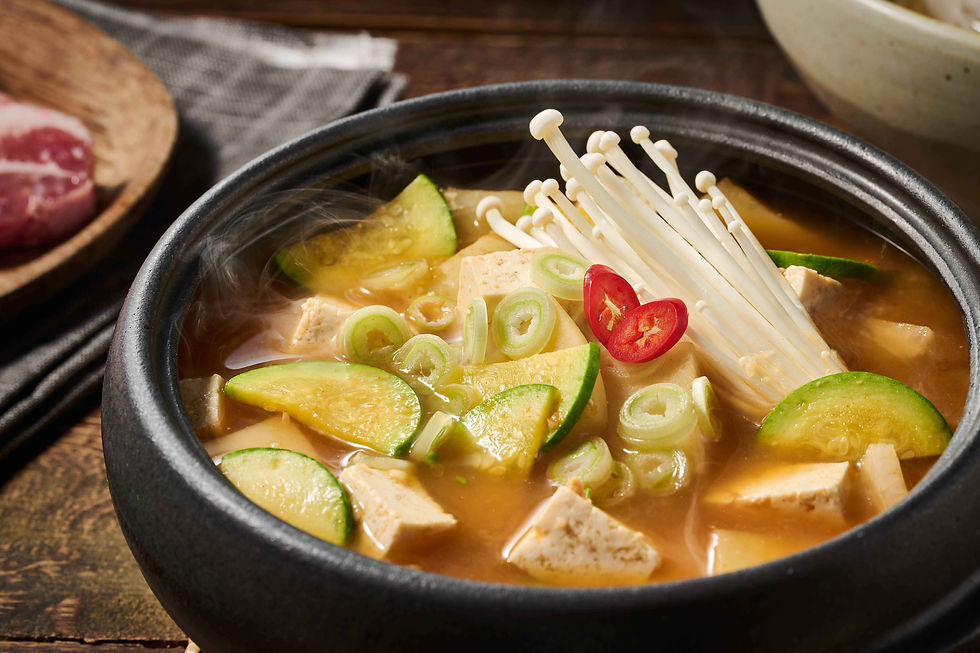
A familiar bowl for ordinary days
Among the foods Koreans say they love most, doenjang jjigae is always there. It is not a dish reserved for special occasions, but one that comes to mind on the most ordinary days—when you want something simple, familiar, and comforting. Its appeal lies in how easily it fits into Korean everyday life, appearing naturally on the table and feeling just as right at home as it does in a restaurant. Doenjang jjigae is also more than one kind of dish. It can be a meal in itself, or the final warm note after grilled pork belly or other Korean barbecue. It is never flashy, but it is always close at hand.
Different tables, different doenjang
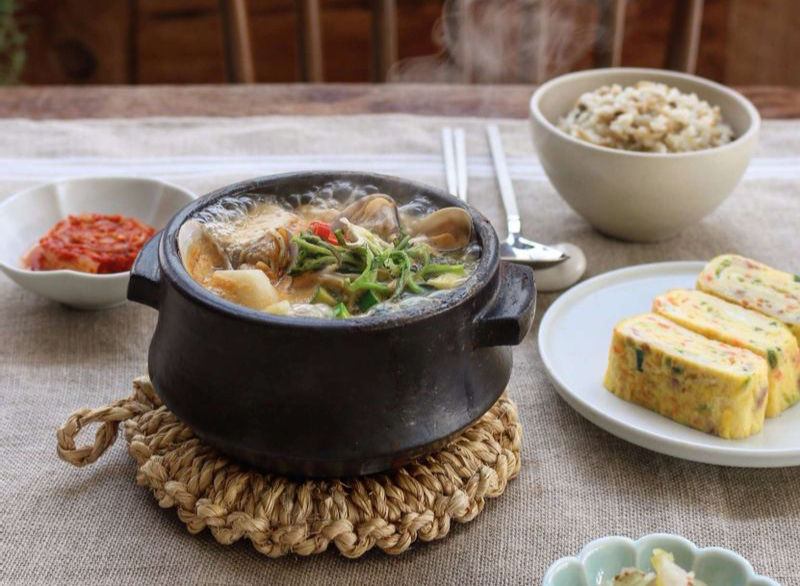
If there are 100 Koreans, there are probably 100 preferred doenjang recipes and just as many favourite restaurants. Doenjang changes depending on how it is cooked and what ingredients are added. For some, it is the home-cooked meal they ate in a small studio flat. For others, it is the familiar stew that always appeared on their parents’ table. That is why doenjang jjigae feels less like a fixed recipe and more like a dish that is completed differently at every table.
Doenjang jjigae also changes with the seasons. The broth itself can vary depending on taste, with beef, anchovies, mushrooms, or shellfish all used in different versions. In spring, wild garlic and scallions bring fragrance; in summer, zucchini and green chilli make the stew feel lighter and fresher. This seasonal flexibility is part of what keeps the dish so firmly rooted in Korean daily life.
What makes Korean doenjang different?
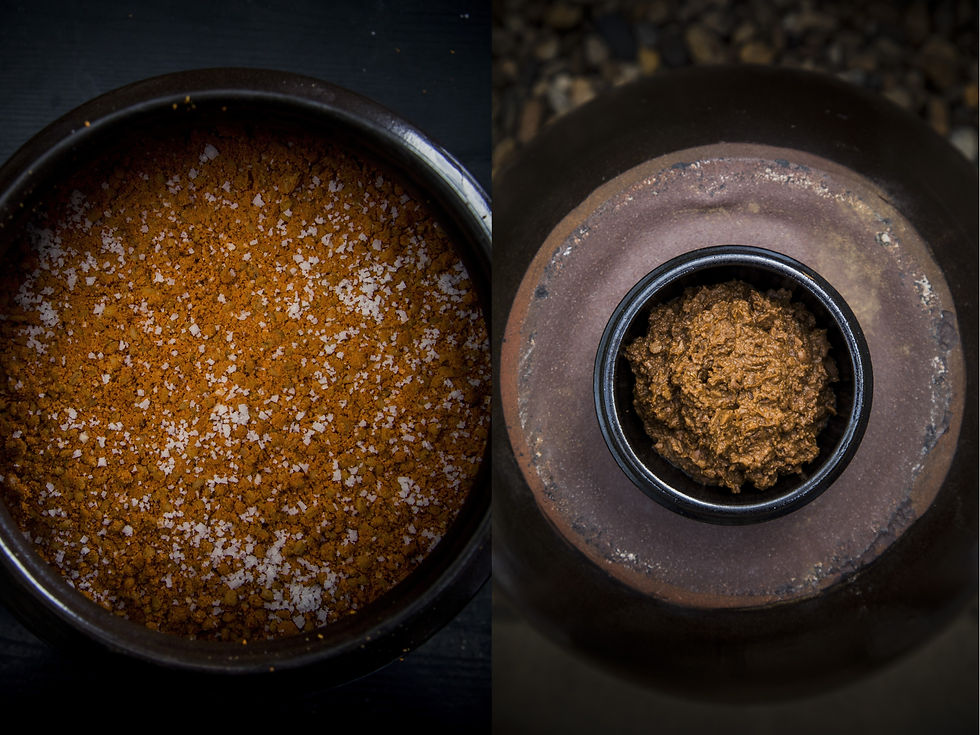
At the centre of doenjang jjigae is doenjang itself. Korean doenjang is made by boiling soybeans, forming them into a meju block, fermenting them in saltwater in earthenware pots, and ageing them over time. Once the soy sauce is drawn off, the remaining solids are aged again to create the paste used in jjigae. Compared with Japanese miso, which is more familiar to many people in the UK, Korean doenjang tends to have a stronger aroma and a more layered flavour. Miso often uses soybeans with rice or barley koji, while Korean doenjang relies on soybeans alone and develops its character through a longer fermentation process. The result is a different aroma, a different depth, and a different pace of flavour.
Doenjang jjigae in London
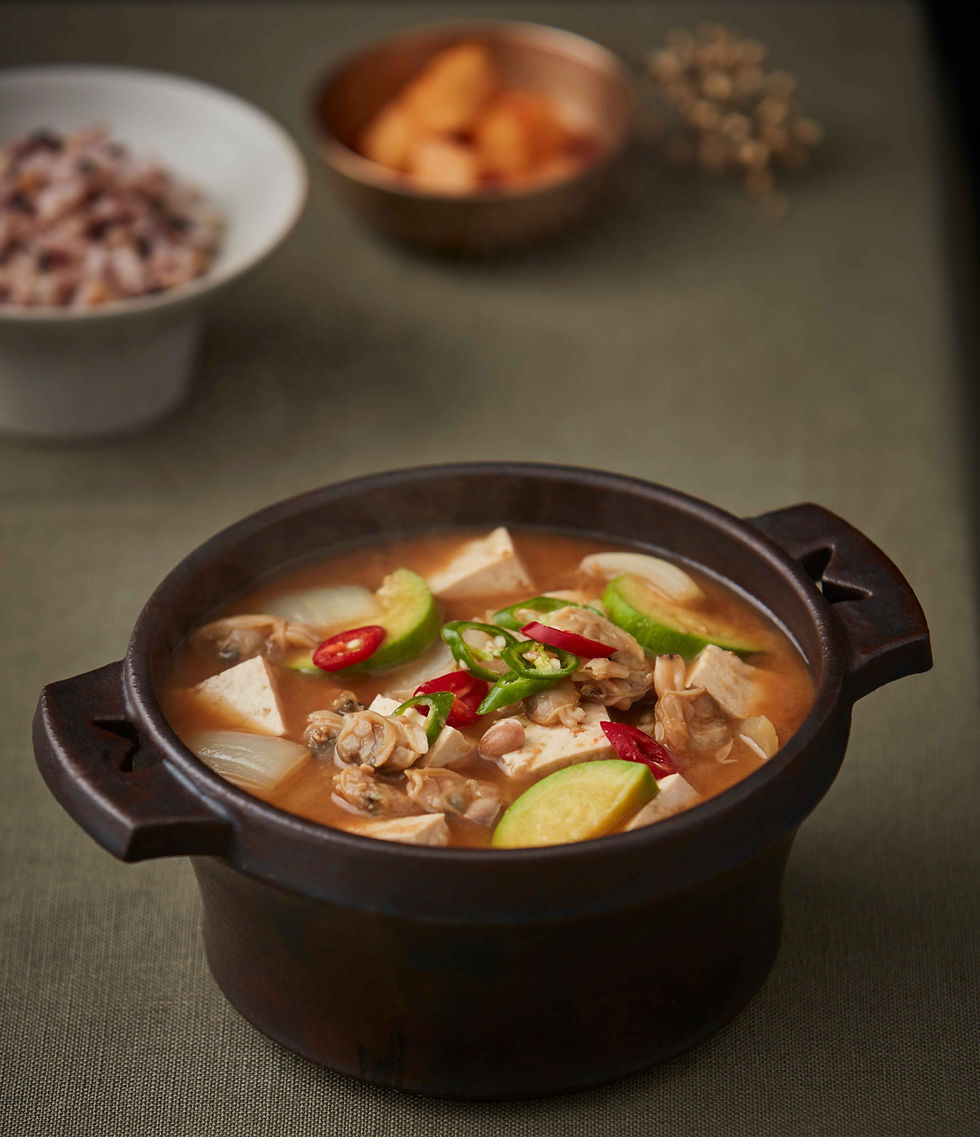
In London, doenjang jjigae is easy to come across. Because it is such a standard part of Korean home cooking, it is often included on the menu of most Korean restaurants in the city. In New Malden, with its concentration of Korean food shops and restaurants, it is especially easy to find familiar ingredients and familiar flavours. Restaurants such as Jingojae and Ggachi Ne serve it with grilled pork belly, letting diners experience the same flow of barbecue followed by jjigae that appears so often in Korean dramas. Even London’s mainstream supermarkets now stock basic Korean pantry staples such as soy sauce, gochujang, and doenjang. With a few ingredients of your own choice, it is easy to make a bowl that feels simple, warm, and entirely at home.
Cahchi
79-81 Kingston Rd, New Malden KT3 3PB
https://cahchi.co.uk
Jin Go Gae
272 Burlington Rd, New Malden KT3 4NL https://jingogae.wordpress.com
A bowl that always returns
Doenjang jjigae is not a flashy dish. But it is one that families naturally share at the table, one that friends order at a Korean barbecue, and one that feels right when you want to leave behind something heavy or overly rich and return to something simple. It is a dish that keeps coming back because it is easy to recognise, easy to share, and easy to trust. In that sense, doenjang jjigae is one of the most familiar bowls in Korean daily life.
Editor H.
KOREAN
된장찌개, 한국인의 집밥
평범한 날 떠오르는 소박한 한 그릇
한국인이 좋아하는 음식에 대한 조사에서 된장찌개는 빠지지 않는 이름이다. 특별한 날의 메뉴라기보다는, 가장 평범한 날, 가장 평범하게 먹고 싶은 날 떠오르는 음식이기도 하다. 한국인의 밥상에서 가장 쉽게 접할 수 있는 음식이란 점에서 그 보편성이 가장 큰 매력이라고 볼 수 있다. 된장찌개는 한 가지 역할에만 머물지 않는다. 그 자체로도 충분히 든든한 식사가 되고, 삼겹살 같은 한국 바비큐 뒤에는 식사의 끝을 정리해 주는 편안한 마무리가 되기도 한다. 화려하진 않지만, 그래서 늘 식탁 가까이에 머무는 음식이기도 하다.
집집마다 다른 된장
한국 사람 100명이 있다면, 아마도 그 100명에게는 각자 좋아하는 된장 레시피와 좋아하는 된장찌개 식당이 따로 있을 만큼 된장은 끓이는 방식도 조금씩 다르고, 넣는 재료에 따라 또 다른 매력을 띠는 음식이다. 어떤 사람에게는 자취방에서 자주 끓여 먹던 집밥이고, 어떤 사람에게는 부모님의 식탁에서 늘 만나던 가장 익숙한 국물이다. 그래서 된장찌개는 정해진 하나의 레시피보다, 각자의 식탁에서 완성되는 음식에 더 가깝다.
된장찌개는 기본 육수가 소고기, 멸치, 버섯, 해물 등 개인의 기호에 따라 달라지기도 하고, 많은 한국 음식들이 그러하듯 계절에 따라 다른 모습과 맛을 보여주기도 한다. 봄에는 냉이와 달래가 들어가 향으로 먼저 계절을 알리고, 여름에는 애호박과 풋고추가 더해져 조금 더 가볍고 산뜻한 맛을 만든다. 이 계절감이야말로 된장찌개가 오랫동안 사랑받는 이유 중 하나다.
한국의 된장은 무엇이 다를까?
된장찌개의 중심에는 결국 된장이 있다. 한국의 된장은 콩을 삶아 띄운 메주와 소금물을 옹기 독에 넣어 장기간 숙성시킨 뒤, 간장을 떠내고 남은 건더기를 다시 숙성해 만드는 발효식품이다. 한국의 된장보다 영국에서 좀 더 알려진 일본 미소 된장은 콩과 쌀·보리류의 누룩을 함께 쓰는 경우가 많지만, 한국의 된장은 콩만으로 만든 메주와 소금물의 조합, 그리고 장기간의 숙성을 거치며 더 구체적이고 선명한 향을 지닌다. 콩을 기본으로 만들지만, 만드는 방식과 발효의 길이, 그로 인해 생기는 향과 맛의 구조가 서로 다르게 발전했다는 점이 한국 된장의 가장 큰 차이점이라고 볼 수 있다.
런던에서도 이어지는 맛
된장찌개는 한국인들에게는 집밥이라고 하면 김치찌개와 함께 가장 먼저 떠오르는 음식인 만큼, 런던 시내의 대부분의 한식당 메뉴에 기본적으로 포함되어 있는 경우가 많다. 그리고 대표적인 한인타운으로 알려진 New Malden에는 한국 식재료점과 한식당이 밀집해 있어, 한국의 된장찌개와 익숙한 재료, 익숙한 맛을 비교적 쉽게 찾을 수 있다. 진고개, 까치네 같은 식당은 삼겹살과 함께 된장찌개를 추천 메뉴로 소개하고 있어, 런던에서도 한국 드라마 속의 한국식 식사의 흐름을 그대로 경험할 수 있다. 런던의 일반 슈퍼체인에서도 한국의 기본 장류인 간장, 고추장, 된장을 어렵지 않게 구입할 수 있다. 좋아하는 재료를 넣고 직접 끓여서, 나만의 된장찌개 레시피를 찾아보는 것도 좋겠다.
가장 일상적인 한 그릇
된장찌개는 화려한 음식은 아니다. 대신 가족들과 함께 식탁에서 자연스럽게 나누는 한 그릇이기도 하고, 동료·친구들과 고깃집에서 소주나 밥과 함께 편하게 식사를 마무리 해주는 음식이기도 하다. 그리고 밖에서 자극적이고 부담스러운 음식을 먹다가도 집밥이 그리워질 때 가장 먼저 떠오르는 간단하고 소박한 식사 메뉴다. 그래서 된장찌개는 한국인에게 편안하고 익숙한 음식의 대명사이기도 하다. 된장찌개는 특별히 기념할 만큼 비싼 재료를 쓰지 않지만, 그만큼 오래 반복되는 음식이기에 한국인의 식탁에서 가장 오래 머무는 한 그릇으로 자리 잡았다.


Comments